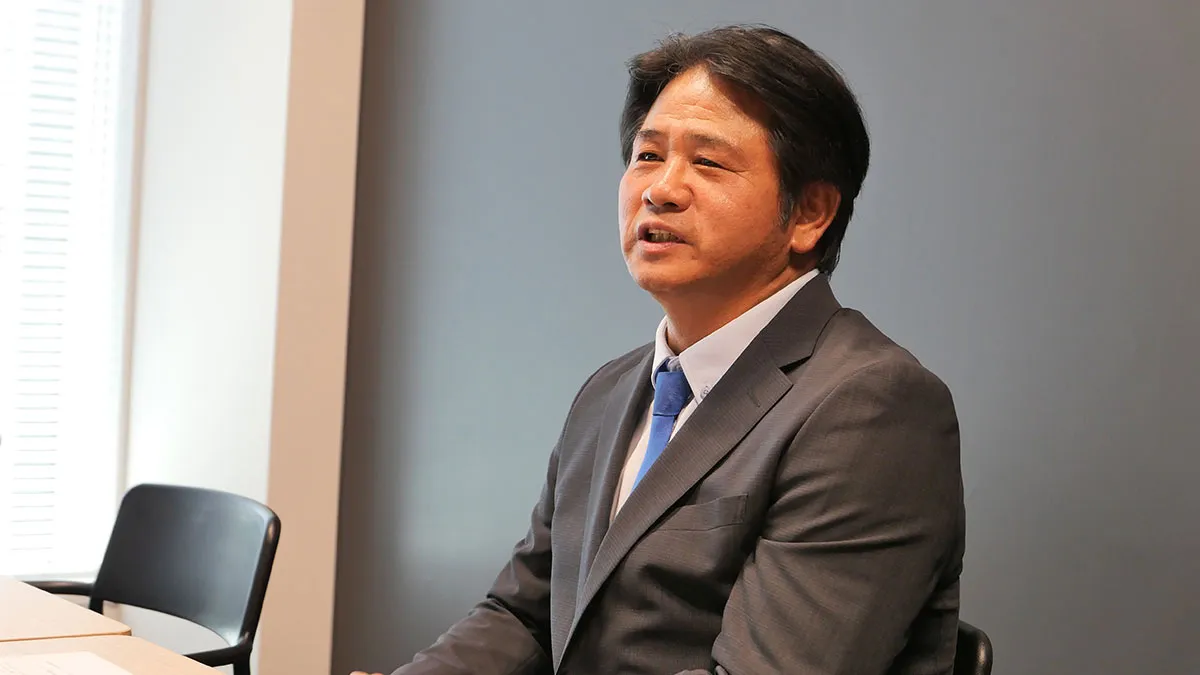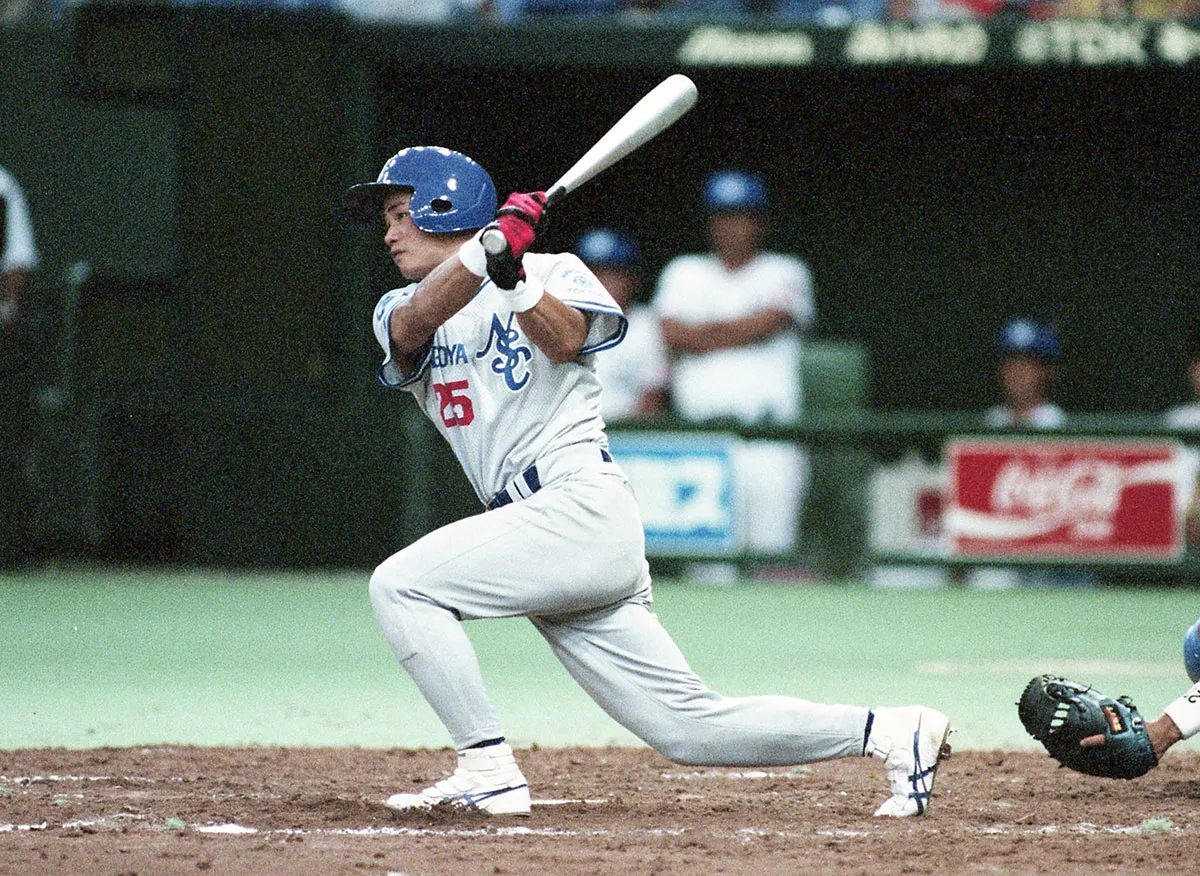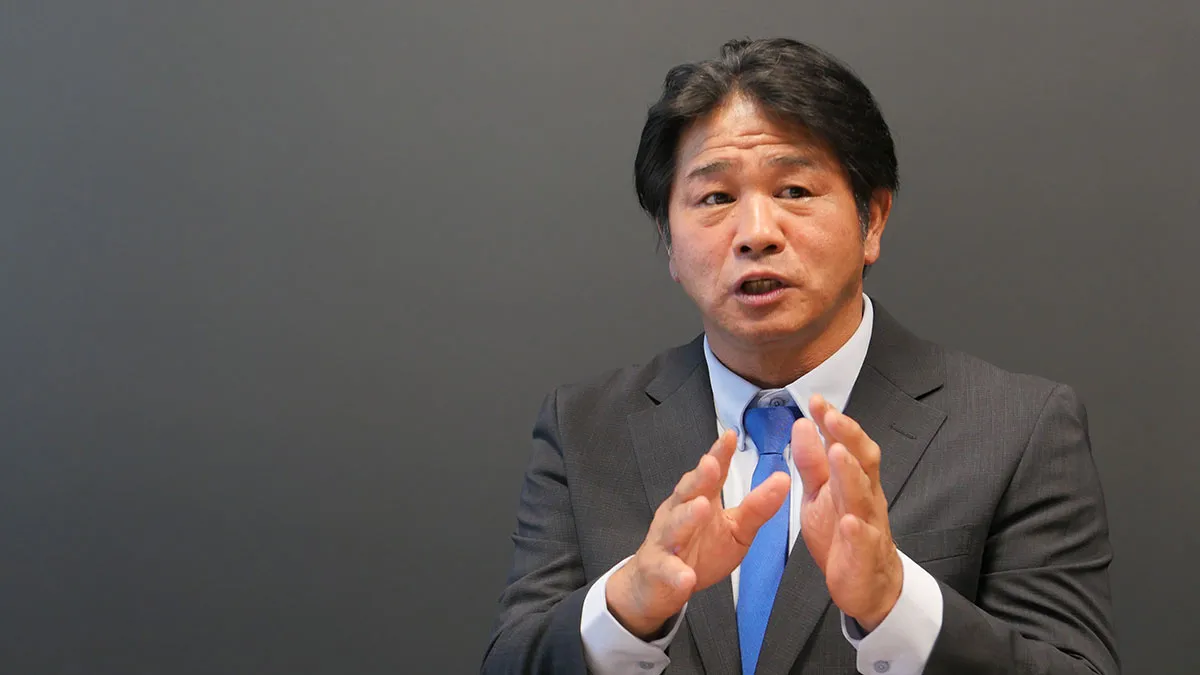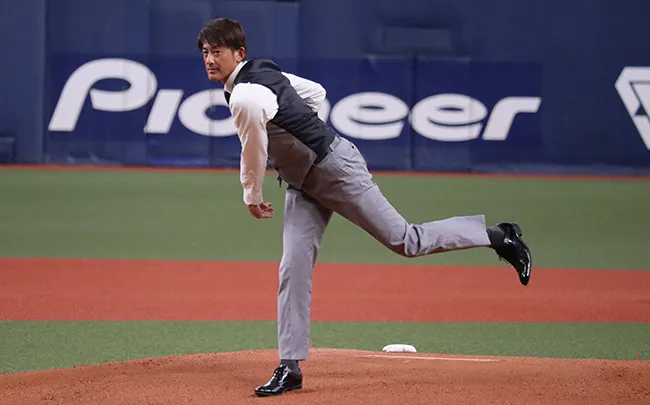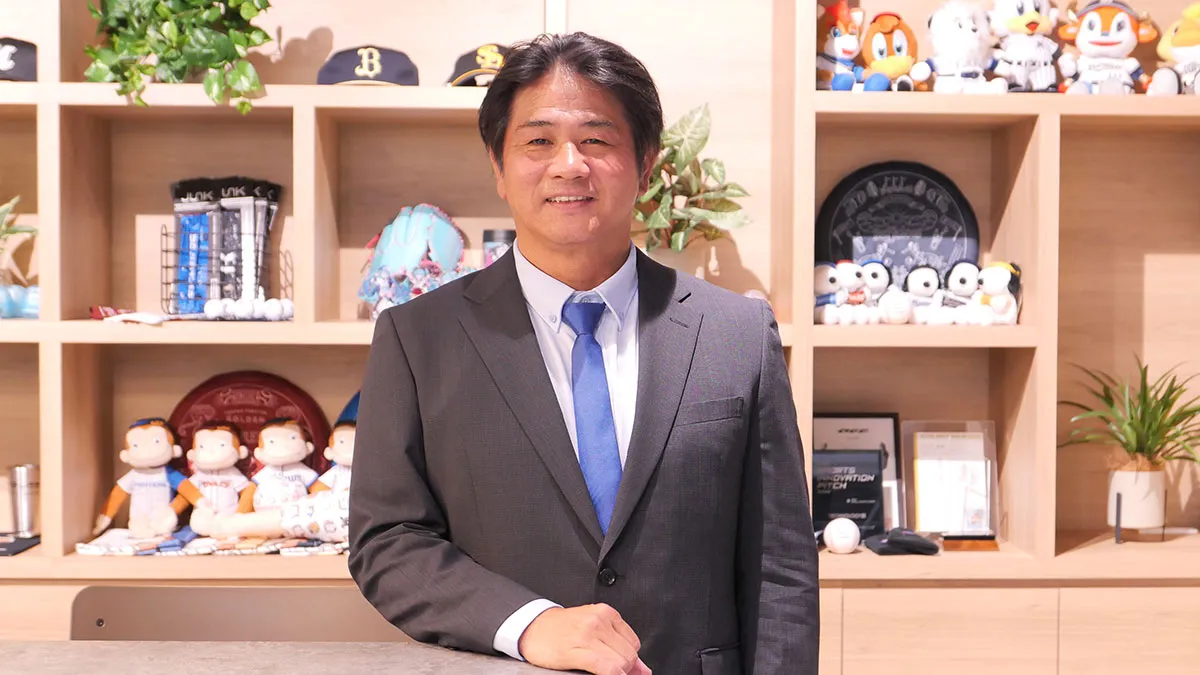
Tani Yoshitomo won the Young Lion Award (Rookie of the Year) at the 66th Intercity baseball Tournament. With his achievements in amateur baseball and the Olympics under his belt, he went professional and played for Orix and The Giants. After retiring, he became an executive advisor for the Toshiba (Kawasaki) baseball team, coaching the next generation of players, and has now moved into the media as a commentator. Knowing the thrill of amateur baseball, Tani shares his memories of his time in amateur baseball and his outlook for this year's Intercity baseball.
◇ ◇ ◇
From a team in its second year to the Intercity Championships, the Olympics, and now professional
The reason I went on to become a professional baseball was because my dream of going pro as a college graduate did not come true.
I had expressed my wish to become a professional player after graduating from college, but one of my seniors at the university was a manager at Mitsubishi Motors Okazaki (Okazaki City), so I asked him if he would let me join the club if I could not become a professional player.
At the time, Mitsubishi Motors Okazaki was in its second year of existence. That might make you think that the team structure was not yet established and that there was no competition for positions, but in fact it was completely different (laughs). Rather than being a new team, the team was made up of players from Mitsubishi affiliates Mizushima, Kawasaki, and Kyoto, and with many veteran players, it had the strength to compete even in the Tokai region, where there are many strong teams. The facility was rented from the baseball division of Mitsubishi Heavy Industries, and ground was used by the automotive and heavy industry clubs in the morning and afternoon.
The difference between the working baseball and high school and college was that the operations and other details were more specific and incorporated elements of data baseball. Besides, it was also difficult to have independent practice in addition to the whole practice because ground was only available in the morning. I was grateful, though, that weight training started in earnest in the workforce and, conversely, there was less running involved.

Speaking of memories from my time at work, shortly after joining the company I was invited to training camps for potential national and Olympic representatives, and I was also attending baseball club practice, so I was hardly able to come to work. I would occasionally come to work and pretend to be doing clerical work such as organizing documents (laughs). Even so, everyone at the company was so warm and supportive, and I was really grateful for that.
In 1995, Mitsubishi Motors Okazaki was unable to participate in the Intercity baseball, but I participated as a reinforcement player for Nippon Steel Nagoya (now Nippon Steel Tokai REX, Tokai City). What is the image of being a reinforcement player? You might think that you'd just be "intruding" on an already established team that had won the regional tournament, but in fact, you were welcomed very well and treated well. You were provided with new jersey and suits, and you were guaranteed opportunities to play. I had a great time during that month in such a wonderful environment (laughs). I hit home run in the first game of the Intercity baseball Tournament against Tokyo Gas, and won the Young Lion Award. Although the team lost in the quarterfinals, it was a memorable tournament.

Speaking of memories from my time as a working professional, the Atlanta Olympics must be my favorite. I formed a team mainly consisting of amateurs from universities and working professionals, and it also included some impressive members who had not yet turned professional, such as Nobuhiko Matsunaka (Nippon Steel Kimitsu/currently Nippon Steel Kazusa Magic) and Kosuke Fukudome (Nippon Life, Osaka City).
I was close to my classmate Yasuyuki Saigo (Mitsubishi Motors Kawasaki/later Mitsubishi Fuso Kawasaki), who was also outfielder. I have fond memories of playing together in Atlanta.
At the Olympics, a particular issue was how to deal with Cuba. strike zones of international umpire are wide, and pitcher attack with slider that drop far outside the plate, so I was searching for a way to deal with that. However, I'm the type of person who doesn't look at detailed pitcher data and instead responds at the plate, and if I keep too much data in my head, it actually hinders my own play. Also, the Cuban pitcher had a speed that was beyond the numbers that I could sense when I was at bat. So I valued what I felt at the plate and the simple feeling of hitting the ball that came my way. This didn't change even after I turned pro.
He was drafted in the fall of that year, becoming the team's first professional baseball player.
Mitsubishi Motors Okazaki has produced many professional baseball players from there. Kazuo Yamaguchi (currently Orix scout, in charge of pitcher Yoshinobu Yamamoto, etc.) is also a junior of mine at the company and in the professional league (Orix BlueWave). Come to think of it, I was the one who invited him to join amateur baseball. "You can go (pro) in two years," I told him.
This year's Toshiba is a hitting team

After retiring in 2021, he became an executive advisor for Toshiba. His main job involves communicating with players and providing advice to managers and coaches. He used his professional experience to provide advice on the direction of the team as a whole while staying close to the players.
There are many strong teams, such as Mitsubishi Heavy Industries East (Yokohama City), which won last year's Intercity baseball Tournament, and Toyota (Toyota City), which won the Japan Championship, but I hope Toshiba will win this year.
Toshiba has a long history as a team where winning is a given. Recently, they have added powerful hitters with professional aspirations, such as Shimoyama Yusuke (Keio High School - Keio University) and Saito Taiki (Yokohama High School - Hosei University), strengthening their team. second baseman Yamada Takuya (Tokai University Sagami High School - Aoyama Gakuin University) also served as captain during his university days and has grown significantly. They have great hitting power, so I hope they can keep hitting and hitting and winning.
The players have been practicing hard for a whole year in preparation for the Intercity baseball Tournament. Their efforts are visibly evident, and they are putting their lives on the line. I hope that this will be a good tournament for the players, one that will be memorable.
I'm looking forward to seeing the cities and companies competing together at the Intercity Championships. I hope the players will give it their all. I'm rooting for you!
Yoshitomo Tani
Born in Osaka Prefecture in 1973. After graduating from Jinsei Gakuen High School (Kagawa) and Osaka University of Commerce, he joined the Mitsubishi Motors Okazaki baseball Club. He was selected second overall by Orix BlueWave in the 1996 draft and joined the team. He played The Giants from the 2007 season and for Orix The Buffaloes from the 2014 season. After retiring in 2015, he has worked as a commentator and an executive advisor for Toshiba. He currently devotes himself to supporting his son, Yoshiaki, who baseball for Komazawa University.
Narration by Yoshitomo Tani
Interviewer: Yu Ebihara
Information
The 96th Inter-City baseball Tournament
Thirty-two teams representing cities across the country will be set to compete in the tournament. Mitsubishi Motors Okazaki will play JR Shikoku (Takamatsu City) in the second game (starting at 14:00) on August 29, and Toshiba will play JR East (Tokyo) in the third game (starting at 18:00) on the same day.
Dates: Thursday, August 28 through Monday, September 8, 2025
Location: Tokyo Dome
Tickets and information on participating companies: https://www.jaba.or.jp/96cityopposition/
Ticket Campaign:
Pacific League Hokkaido Nippon-Ham, Tohoku Rakuten, Orix, Chiba Lotte Marines, and even Central League The Giants, Hiroshima, Chunichi, Yokohama DeNA, and Tokyo Yakult Fan Club members of each team will receive special discount prices for same-day tickets to the Inter-City baseball Tournament. Tokyo Dome Please present your membership card at the ticket sales counter at Discount prices are as follows.
** **
Premium seats 3,300 yen → 3,100 yen
Special seat S 2.750 yen → 2,400 yen
Special seat 2.650 yen → 2,200 yen
Excite seat 5,500 yen → 4,850 yen
Balcony A seats 2,400 yen → 2,000 yen
Balcony B seats 2,200 yen → 1,750 yen
No discount for outfield seats, group box seats, group terrace seats, group seats, and wheelchair seats. There is no discount for special seats and balcony seats for children.
** **
On September 6 (Sat.) and 7 (Sun.), children's tickets (special seats and balcony seats) will be free of charge on "Mynavi Kids Day".
Present campaign:
Autograph balls of the players who won the Hashido Prize (MVP) and Kuji Prize (Fighting Spirit Prize) selected at the 96th Inter-City baseball Tournament will be presented.
Quantity: 1 each
Application form: https://forms.cloud.microsoft/r/zn8nixdHaV
Period: August 26 (Tuesday) - September 8 (Monday)