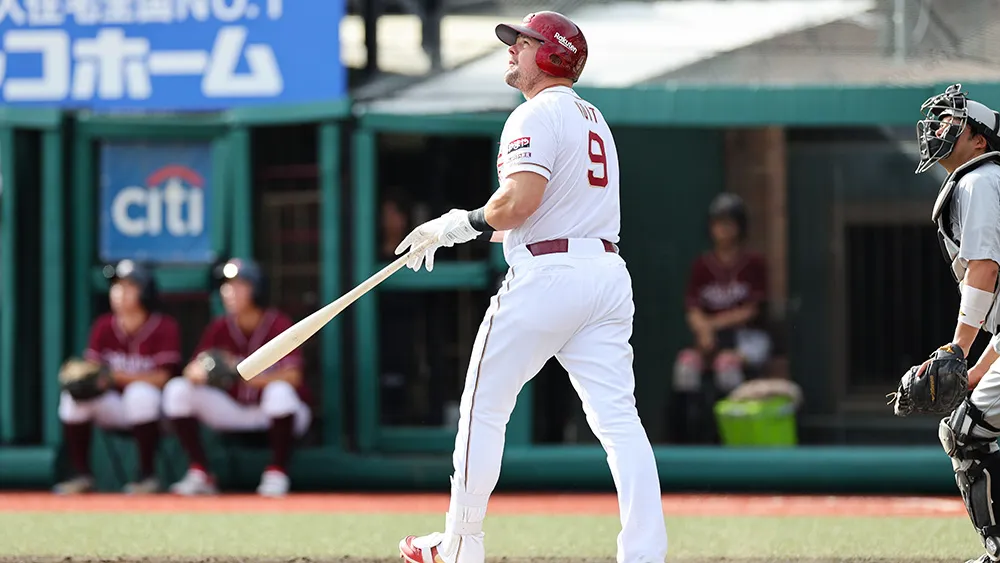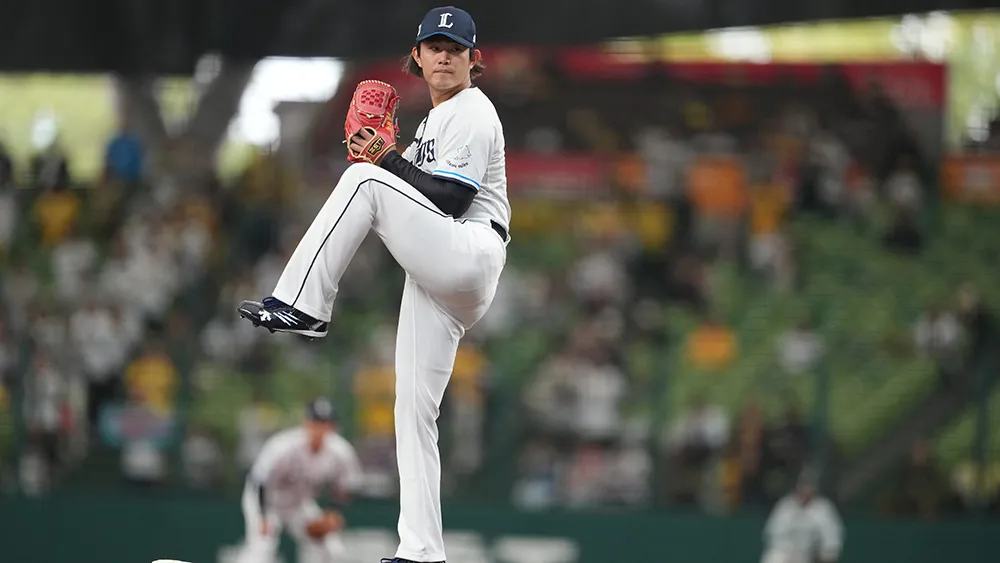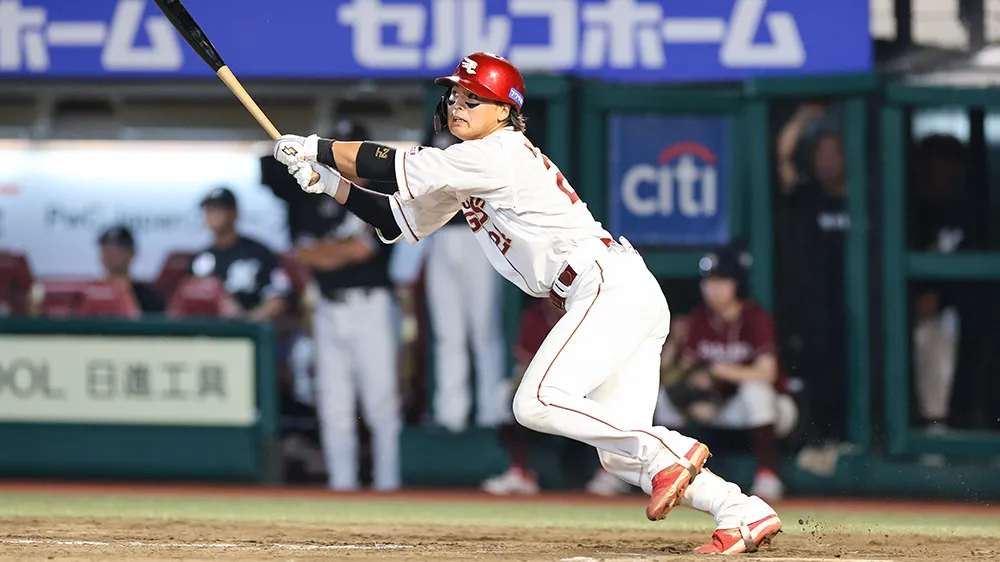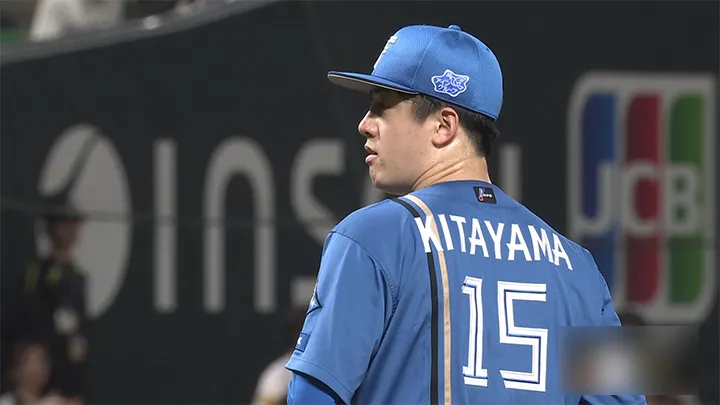
BABIP, which has a significant impact on batting average, is easily influenced by luck.
The BABIP, which indicates the percentage of balls in hit that result in Home Run runs), is one of the most important figures in the field of sabermetrics. BABIP is heavily influenced by luck, and the general benchmark is said to be .300.
In other words, players whose BABIP was significantly below .300 this season could be considered unlucky throughout the season. In this article, we will introduce players who have a BABIP of .280 or less after recording 20 or more at At Bat in 2025, i.e., players who can be expected to bounce back next season and beyond, divided into four levels based on their BABIP level.
A significant drop in BABIP can lead to serious consequences, including a reduction in playing time.
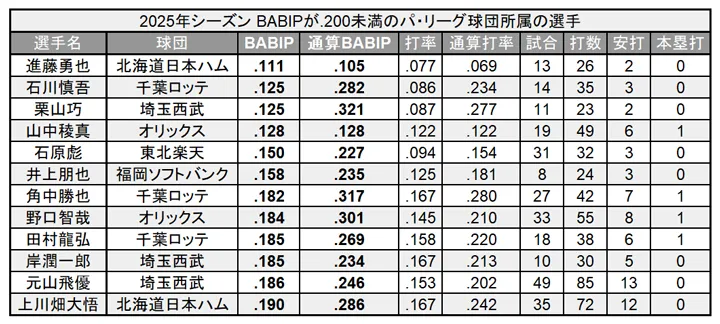
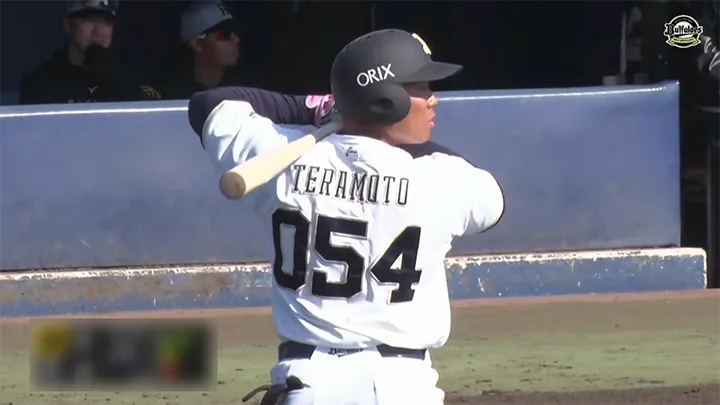
First, let's take a look at the players who recorded 20 or more At Bat in 2025 but ended up with a BABIP in the single digits.

All 12 players who fit the criteria had a batting average of .167 or below, indicating that players with a BABIP below 20% are highly likely to have extremely low batting averages. Furthermore, all players played in fewer than 50 games, indicating that a decline in batting performance due to a worsening BABIP is directly linked to a decrease in playing opportunities.
Takuya Takumi Kuriyama, who has achieved 2,000 career hit, and Katsuya Kakunaka hitter, both have career BABIPs over .300, but their BABIPs have dropped dramatically this season. Kuriyama's batting average is .087, and Kakunaka's is .167. Both players have been in a slump, resulting in significantly fewer playing opportunities, so we can hope that their BABIPs will improve again and they will make a comeback.
Additionally, Junichiro Kishi and Daigo Kamikawahata were key players for the team last season, but this season their BABIPs have dropped, resulting in a batting average of .167 and an OPS in the .460s. If the BABIPs of the other players, including those whose BABIPs fell into the single digits, can improve next season and beyond, there's a good chance they'll get more playing time again.
Even for established hitter, a decline in BABIP can lead to poor performance.
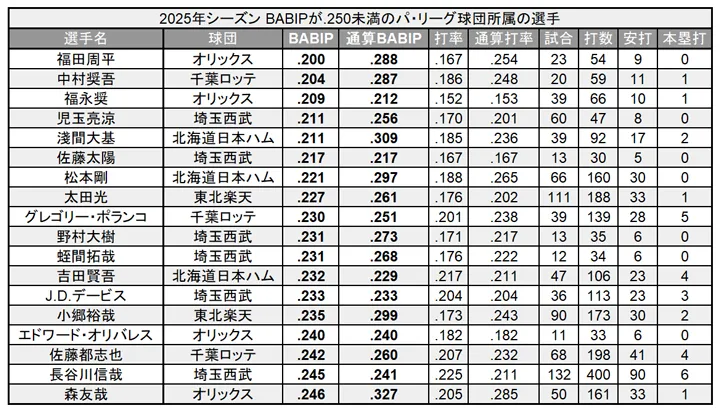
Next, let's look at the players who had a BABIP of under .250 in 2025 under the same conditions.

All eight players with a BABIP of .229 or less had batting averages in the single digits, but three of the six players with a BABIP in the .230s had batting averages in the .200s, and all three players with a BABIP of .242 or higher had batting averages above .200. This suggests that as BABIP increases, overall batting averages are gradually improving.
This season, well-established players such as Shuhei Fukuda, Shogo Nakamura, and Go Matsumoto struggled with batting averages in the single digits, and one of the reasons for this is a significant drop in their BABIP. Since all three players have a difference of .076 or more between their career BABIP and this season's figures, if their BABIP improves next season or later, there is a good chance they will bounce back.
Furthermore, Yuya Ogo the only player in the league to play in every game last season, and Toshiya Sato catcher was named to the Best Nine, both saw their batting performance decline significantly as their BABIP worsened. And the fact that Tomoya Mori, a good hitter who had a career batting average of .285, ended up with a career-worst batting average of .205, also speaks to the significant impact BABIP has on batting average.
On the other hand, while neither Hikaru Ota nor Shinya Hasegawa had high batting averages, both played in over 110 games as key players. Hasegawa also reached the required number of at-bats for the first time, making him a good example of how his significant contribution to the team, including defense capabilities, made up for his low BABIP.
Players who have yet to see many at-bats have the potential to make a big leap forward as their BABIP improves.
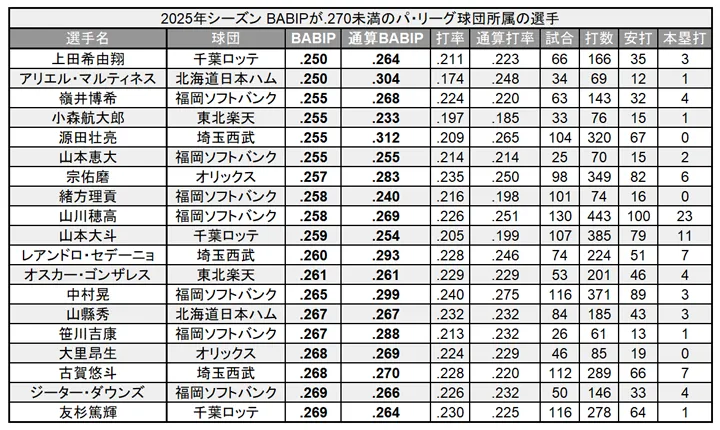
Next, we will introduce players who had a BABIP of less than .270 in 2025 under the same conditions.

All 19 players except Martinez and Kohiro Komori had batting averages in the 20s, and seven of them played in more than 100 games. When the BABIP is .250 or higher, the batting average tends to rise accordingly, and the number of players who are used in many games as main players also increases.
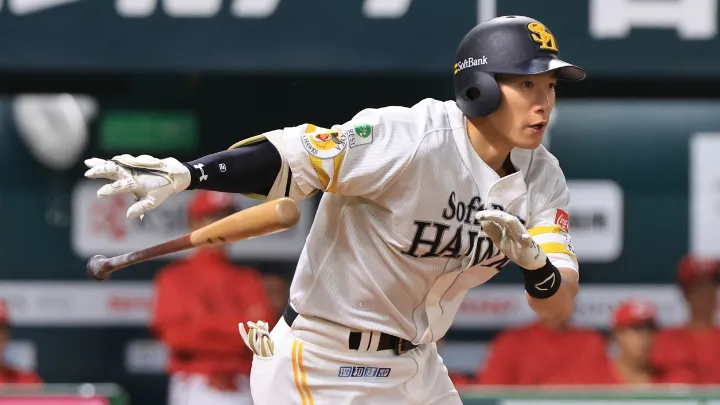
Sosuke Genda has consistently had a batting average of around .260-.270 throughout his career, but this season he has struggled with a batting average of .209. It is not hard to imagine that one of the reasons for his career-worst batting average was the fact that his BABIP this season was .255, a significant drop from his career number (.312).
Furthermore, Hotaka Yamakawa and Akira Nakamura, who both contributed to Fukuoka Softbank 's championship, both saw their batting averages fall well below their career averages due to a decline in their BABIP. Yuma Mune also posted a batting average of .235 for two consecutive years, but his BABIP in 2021 and 2022, when he recorded a batting average in the .270s, was above .296. Therefore, improving the BABIP for all three players will likely be key to their recovery.
Additionally, five players -Daito Yamamoto, Kosei Osato, Yuto Koga, Koga Yuto, and Atsuki Tomosugi- had low BABIPs this season, below .260, but none of them were significantly different from their career numbers. None of Riku Ogata players have had many at-bats in the first team, so if they are lucky enough to get a chance to increase their BABIP, it is thought that they have the potential to see a sudden improvement in their batting performance.
Overall performance improved, but no player had a batting average above .250.
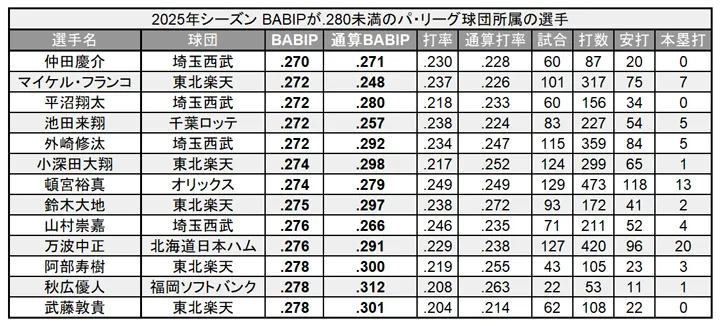
Finally, let's look at the performance of players who had a BABIP of less than .280 in 2025 under the same conditions.

Finally, there are no players with a batting average below .200, but there are also no players with a batting average above .250. While this is an improvement compared to players with a BABIP below .270, even a BABIP at this level can still be a contributing factor to poor batting performance.
Yuma Tongu and Chusei Mannami Mannami hit double-digit home Home Run and reached the required number of at-bats, but their low BABIPs meant they struggled in terms of batting average. Even accomplished players like Shuta Tonosaki, Daichi Suzuki, and Hiroto Kobukata recorded numbers that were more than .020 points lower than their career BABIP, and their batting averages also dropped, so we can hope for a recovery in their BABIP next season.
On the other hand, Keisuke Nakata, Franco, Raito Ikeda, and Takayoshi Yamamura all have low career BABIPs, and while their BABIPs this season are in the .270 range, they all recorded batting averages above their career averages. Given these results, this group could be described as having the potential to significantly improve their performance depending on future BABIP trends.
Will the players featured this time be able to improve their BABIP and bounce back next season?
Among the players whose batting averages dropped as their BABIPs worsened, there were quite a few who had been key players on their respective teams in the past. It's also important to note that there were many cases where young players who were expected to make great strides in the future struggled due to a lack of a favorable BABIP.
Will the players featured in this article be able to improve their BABIP and improve their batting performance next season and beyond? Since BABIP tends to converge to a certain value over the long term, we hope that each player will be lucky enough to increase their BABIP and make a comeback or a leap forward.
Written by Ryota Mochizuki
![Tohoku Rakuten Golden Eagles player Yuya Ogo (left) and Orix The Buffaloes player Tomoya Mori (right) [Photo: provided by the team]](https://media.insight.pacificleague.com/webp/cmS6OyNdiqjx5I62Nkg3Z15znNNSa5VkDHqFe6OB.webp)