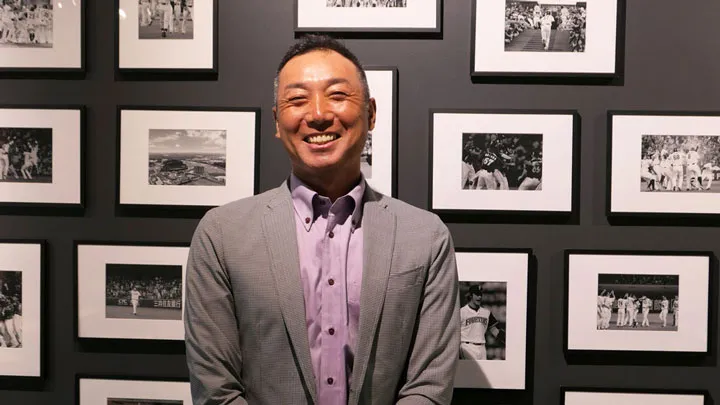
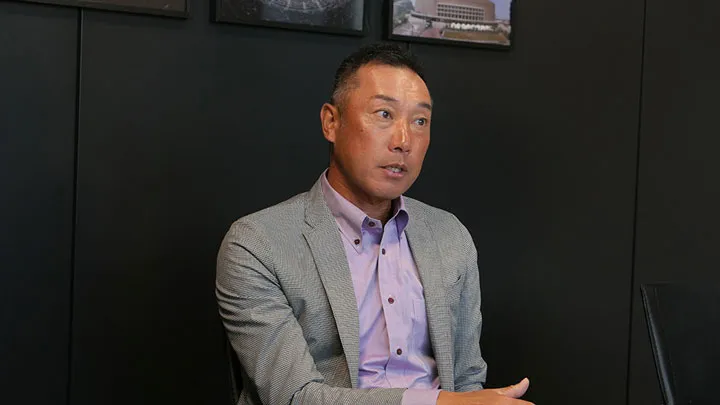
Shunsuke Watanabe played for the Chiba Lotte Marines and other teams and is currently involved in the baseball world as a commentator and instructor. Having built an era as a pitcher at Nippon Steel Kimitsu (now Nippon Steel Kazusa Magic) and experienced joining the Japan national team, Watanabe later led the team as a player-coach, full-time coach, and manager. We spoke with him about the fierce battles of corporate baseball, his memories of the 2000 Intercity Baseball Tournament, and the highlights of this year's tournament.
◇ ◇ ◇
The greatest appeal of corporate baseball lies in the "qualifiers," where everything is put on the line.
What I have felt since I joined Nippon Steel Kimitsu is that in corporate baseball, the stage where players fight with the most on the line is the 'qualifiers' rather than the main tournament. The main Intercity Baseball Tournament is like a 'reward' that only those who have survived the grueling qualifiers can experience. The regional qualifiers are so harsh that there is a sense of tension where there is no tomorrow if you lose.
Particularly in the South Kanto region where I was, and the Tokai region where the depth of talent has been increasing in recent years, it is a series of fierce battles. In single-elimination tournaments and double-elimination brackets, situations arise where you have no choice but to have your ace pitch in consecutive games. Through the battles to secure a spot in the qualifiers, I personally learned firsthand the harshness and fascination of corporate baseball.
Additionally, a unique charm of corporate baseball is the 'reinforcement player system.' Three players are reinforced from teams that lost in the qualifiers to take on the main tournament, and tactics change significantly depending on how these reinforcement players fit into the team. Not only does it compensate for the team's weaknesses, but you also aim to be the best in Japan together with players from other teams who usually compete as rivals. I believe this unique atmosphere is also part of the fascination unique to corporate baseball.
Reaching the semi-finals of the 2000 Intercity baseball and the words of my mentor that still resonate with me today.
![[Photo provided by Mainichi Photo Service]](https://media.insight.pacificleague.com/webp/8B4A9rJmBSjrCplX8zY8QQT9pH559bBYO9mc620L.webp)
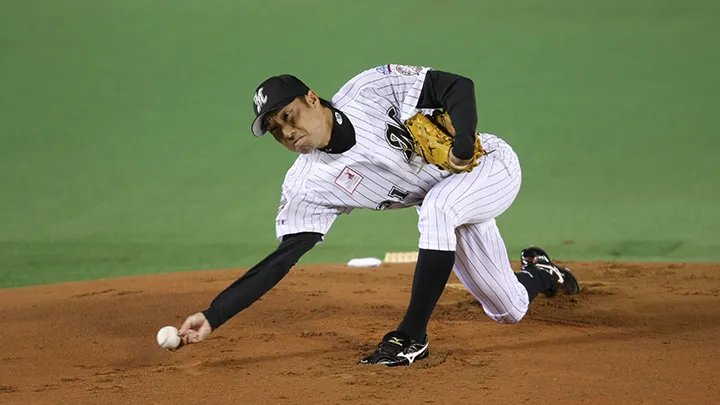
The most memorable moment from my time as a player is the 2000 (71st) Intercity baseball Tournament. In that tournament, Nippon Steel Kimitsu reached the semi-finals, and I myself received the tournament's outstanding player award.
Actually, in the regional qualifiers that year, I wasn't able to pitch the way I wanted. I ended up in a no-out, bases bases loaded jam and had to leave the game, but my senior, Toshiyuki Onda, who took over for me, closer three struck out in a row, and we managed to secure a spot in the tournament. However, Onda injured his shoulder during the main tournament and wasn't able to pitch much. That's why I took mound with a strong feeling that "this time it's my turn."
Back then, it was the era of metal bats, so the opposing teams were very strong and it was extremely difficult to complete game. But when I managed to pitch complete game win against Seino Transportation, which was a game to decide our place in the top four, I was so happy I could jump for joy. We didn't win the championship, but I still vividly remember the moment I pumped my fist in celebration.
I'll never forget my exchange with Coach Atsuyoshi Otake at the time. The day after we lost in the semi-finals, the coach jokingly said to me, "We lost because you didn't say you'd pitch tomorrow" (laughs). Even years later, he would keep saying to me whenever we met, "It's because you said you wouldn't pitch back then," which is now a warm memory.
Incidentally, the team's mascot girl (now the Diamond Supporter) at that tournament was my wife. Furthermore, her performance at the Intercity baseball Tournament led to her being selected to represent Japan at the Sydney Olympics held that same year. In that sense, the 2000 Intercity Baseball Tournament was a major turning point in my life.
Building a team that doesn't lose and the art of pitching changes
From 2015, I served as coach for Kazusa Magic, and from 2020 to 2025, as manager. As a coach, what I always considered when leading a team was "building a team that won't lose."
In the short-term decisive battles of the baseball of working adults, aiming for baseball to win makes you strong when you ride the board, but the risk of being closer by the opponent's pitcher becomes very high. Therefore, I first focused on instilling tenacity that doesn't runs easily, focusing on defense and pitcher strength.
What especially troubled me was the timing of the relievers. As a corporate baseball, once you lose momentum, it's fatal. The hesitation of 'Should I try to pull a little more' can be fatal? I carefully observed pitcher 's expressions, stiff voice, and mound gaze on the bench, and made sure to take a step closer to making a move. The experience of running simulations with the coaching staff almost every day and pouring my all into split-second decisions is a great asset for me as a manager.
The growth of my students was also a great source of fulfillment. The joy when a player who was unnoticed when joining the company has become the team's ace after switching to sidearm and improving their form, is truly exceptional.
The one who started as a coach and turned pro was Hokkaido Nippon-Ham Taisho Tamai pitcher. Even during his corporate career, he pitched calmly without getting fired up, so he had a personality suited for a pro. Watching him become independent and blossom in a limited environment is the most interesting part of leading an adult team.
Human connections cultivated through business and the passionate support that sustains Kazusa.
Another major pillar of corporate baseball is "company business" and "connection with the community." During my time at Nippon Steel Kimitsu, I belonged to the Plate Adjustment Group and was involved in schedule management and factory training. I had experiences that would be absolutely impossible in a normal baseball life, such as operating the flow of thick, red-hot iron plates in the factory in the middle of the night.
Everyone in the workplace and the local community really supports us warmly. They treated us with such familiarity that requests like "We want a baseball club member in our department" would come from the workplace, and when it came to games, they would send passionate cheers from the stands. There were even departments that said, "We want an outfielder to come rather than a starter, because we can always see them playing when we go to cheer." The wonderful thing about corporate baseball is that you can feel the warmth of their support at the same time as the sense of responsibility that comes with competing while carrying the banner of a city or a company.
When I entered the pros, reporters told me that "players from corporate backgrounds are well-spoken," and I believe that is thanks to having learned the foundations of social skills through this kind of corporate life.
This year's Intercity baseball Tournament: Teams to Watch and the Joys of Watching
This year's Intercity baseball also features a very impressive lineup of teams and players.
Under manager Masayuki Yoneda, who served as my batting coach during my time as manager, Nippon Steel Kazusa Magic has evolved into a team with extremely high scoring ability, capable of scoring from anywhere. With strong reinforcements from JFE East Japan such as Kai Hirayama and Renya Omori, they have a promising batting lineup.
Speaking of other teams, Oji, last summer's champions, have pitcher Shin Higuchi and outfielder Masato Shibasaki, both of whom are attracting attention from professional scouts and possess very high potential. In particular, Shibasaki is a fantastic fielder that I have wanted to acquire ever since I was a manager, so I am looking forward to seeing what kind of performance he will deliver at Tokyo Dome.
Also, the Tokai region has tremendous momentum as a team. Teams like Toyota Motor, which is considered a favorite to win every year, and Toho Gas, which showed overwhelming strength in the regional qualifiers and secured the first representative spot, are deep in talent and will likely lead the tournament. Three teams from the Nippon Steel Group are also participating, so it will be interesting to watch from the perspective of a must-win battle within the group, where members are both family and rivals.
If I were to watch a game in person, I would first urge you to pay attention to the "cheering" in the stands. The elaborate cheering spectators from each team, using microphones and musical instruments, are truly impressive. And above all, you'll see grown men putting their heart and soul into every single pitch, rejoicing in victory, and shedding genuine tears in defeat. I hope you'll experience this intense drama, which can only be born from a single-elimination tournament, right there at the stadium.
Passing on the connections built in Kimitsu to the next generation: As a "CO-FIELD KIMITSU" Ambassador.
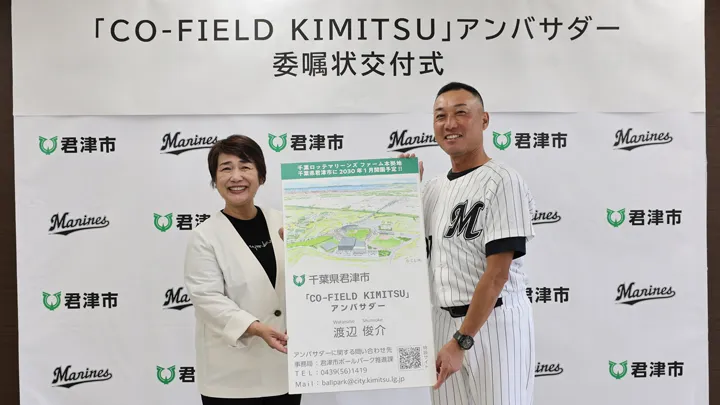
Following the relocation of The Marines' farm team stadium to Kimitsu City, I have been appointed as an ambassador for "CO-FIELD KIMITSU." This is a project in which The Marines and Kimitsu City are working together to revitalize the region through sports.
Kimitsu City is the home base of Kazusa Magic, and I also have experience serving on the Kimitsu City Board of Education, so I have a deep affection for and gratitude towards the city. I am very happy that the connections I cultivated during my time as a working adult have been reconnected in this way, and that I can contribute to the future of the city in a new way.
Sports, especially baseball, have a great power to energize a town and connect people. I would like to do my best, however small my contribution may be, to create an environment where children can enjoy sports and help Kimitsu City develop into an even more vibrant "town of baseball and sports."
profile
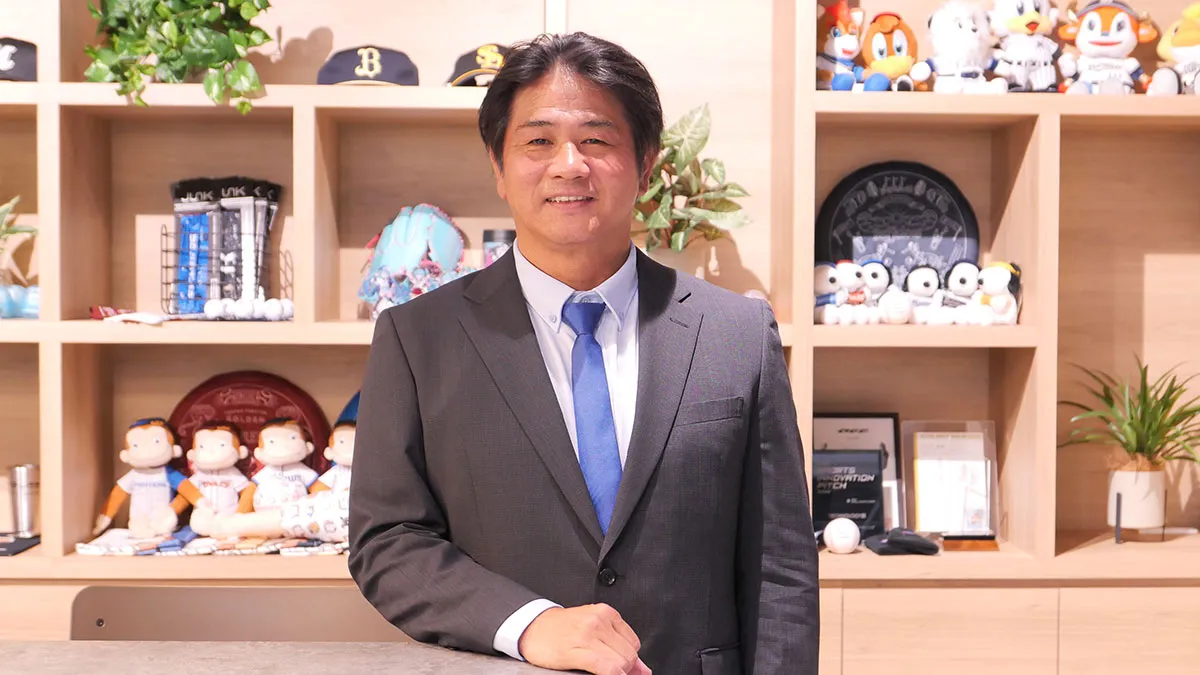
Shunsuke Watanabe
Born in 1976 in Tochigi Prefecture, he played for Nippon Steel Kimitsu before joining Chiba Lotte Marines in 2001. Armed with his underhand pitching style, which was described as "the lowest in the world," he contributed to the team's championship in 2005 and achieved consecutive victories in the World Baseball Classic (WBC) in 2006 and 2009 as a member of the Japanese national team. After leaving Chiba Lotte Marines, he played in overseas leagues and became a coach for Nippon Steel Sumitomo Metal Kazusa Magic (now Nippon Steel Kazusa Magic) in 2015. He served as the team's manager from 2020 to 2025.
information
For professional baseball fans who have become interested in the Intercity Baseball Tournament or amateur baseball after reading Mr. Watanabe's story, here's some good news. Members of the fan clubs of Fukuoka Softbank, Orix Buffaloes, Chiba Lotte Marines Rakuten Eagles, as well as Hanshin Tigers, The Giants, and Chunichi, can purchase same-day tickets for the 97th Intercity baseball Tournament at a special discounted price. This offer applies only to same-day tickets. Please present your fan club membership card at the ticket counter at Tokyo Dome. The discounted prices are as follows:
****
Premium seats: ¥3,300 → ¥3,100
Special seat S: ¥2,750 → ¥2,400
Special seats: ¥2,650 → ¥2,200
Excite Seat: ¥5,500 → ¥4,850
Balcony A seats: ¥2,400 → ¥2,000
Balcony B seats: ¥2,200 → ¥1,750
*There are no discounts for outfield, group box seats, group terrace seats, group seats, or wheelchair accessible seats. Also, there are no discounts for children's tickets for special seats and balcony seats.
****
Additionally, on August 29th (Sat), 30th (Sun), and September 5th (Sat), for a total of three days, it will be "Mynavi Kids Day," and same-day tickets for children (elementary school age and younger = special seats, balcony seats) will be free.
For details about the tournament, please visit the official website of the Japan baseball Association.
https://www.jaba.or.jp/97cityopposition/

![[Fan Appreciation Festival 2026] Today's Pacific League [October 8th]](https://media.insight.pacificleague.com/webp/YfXXX790qmvNiTOrXIWBSmWl7r2L6XEpui6Pneke.webp)
![Kaima Taira achieves an NPB first: 2026 Pacific League title winners [pitcher category]](https://media.insight.pacificleague.com/webp/KcRA9GAQscgF0YYcL93G1blJ2qH8vco2MHyJKwKg.webp)
![[Wingenter Returns Home] Today's Pacific League [October 7th]](https://media.insight.pacificleague.com/webp/3T4SVbt4z8ykfPvDEBzvjeos1yfISBaFVXXMvv8G.webp)
![Ryoya Kurihara won two batting titles: 2026 Pacific League Title Winners [Batting Category]](https://media.insight.pacificleague.com/webp/RXiiCj0UjQrdMefevwrfWduFLVdZlJLIQqiAy0oe.webp)
![[Miyazaki PL] Jun Maeda pitches well with 1 hit and 0 runs over 6 innings; Itua Ikhine records 2 hits](https://media.insight.pacificleague.com/webp/5uXYTTePLoOcnjZuvIaRi1EDjJwnLUu9wAMk3Axr.webp)



![Words from Tsuyoshi Wada that resonated with me, a rugby player and The Hawks fan. [Interview with Koji Shimokawa, Tokyo Suntory Sungoliath player]](https://media.insight.pacificleague.com/webp/4AIo0y2ZveaVaKTnukeVLZxOhruEQoYkMr5Z1RLU.webp)