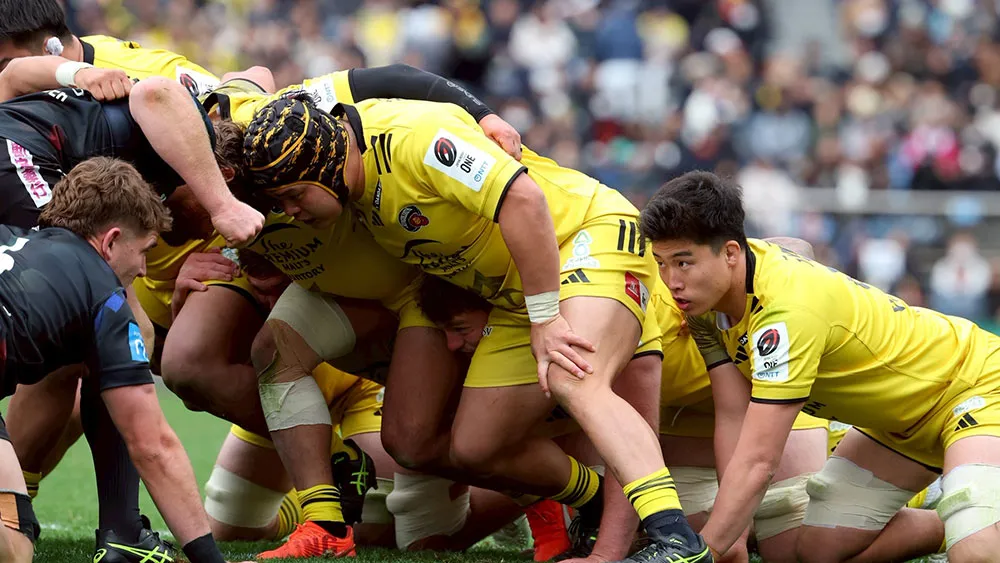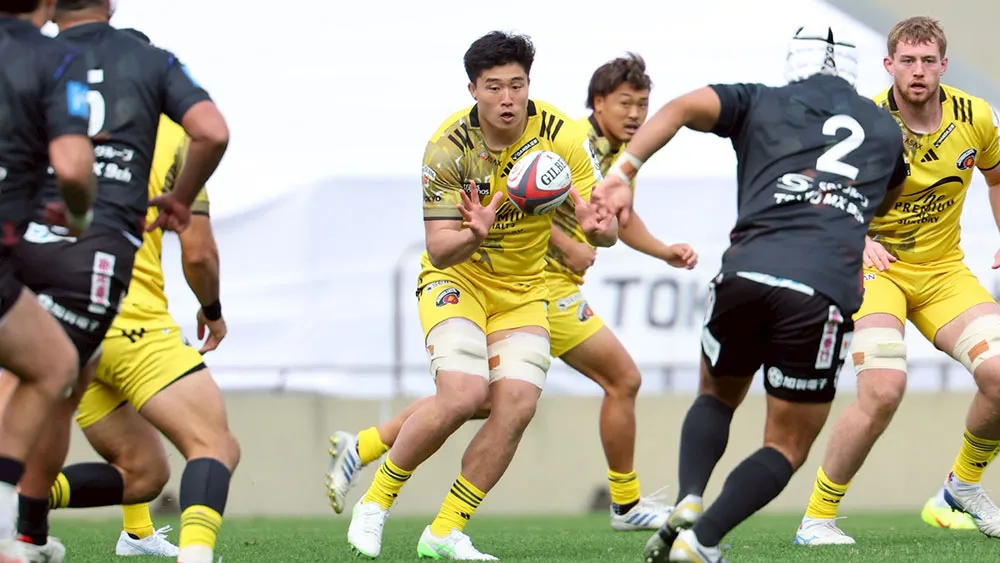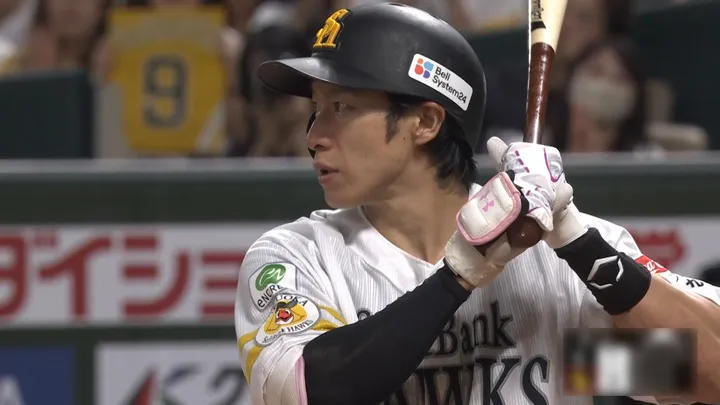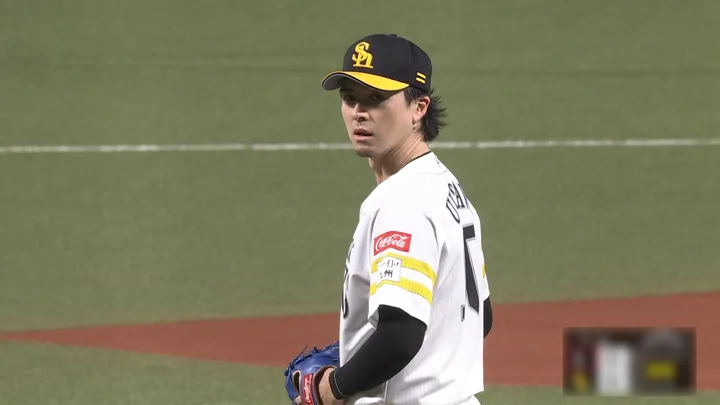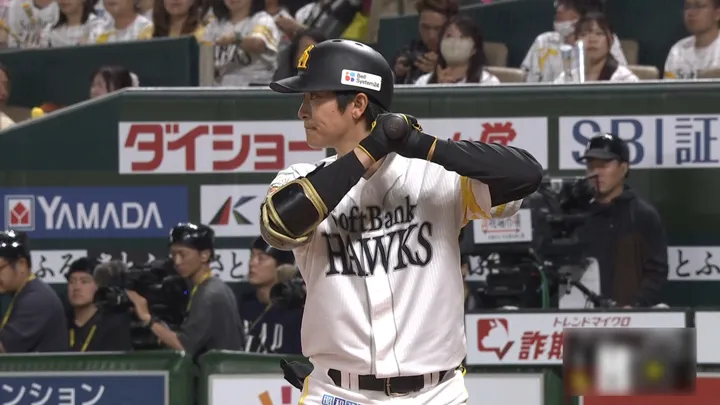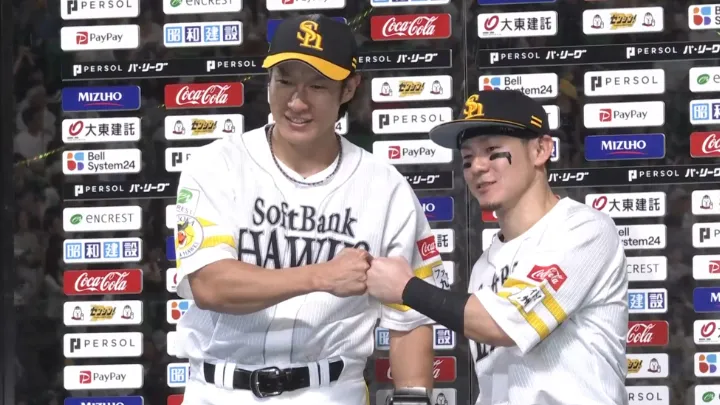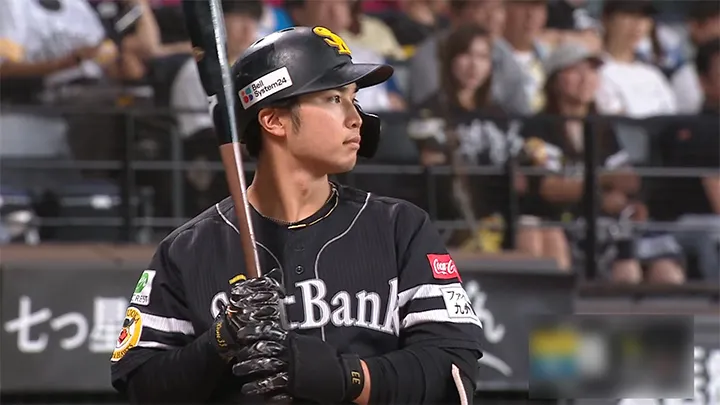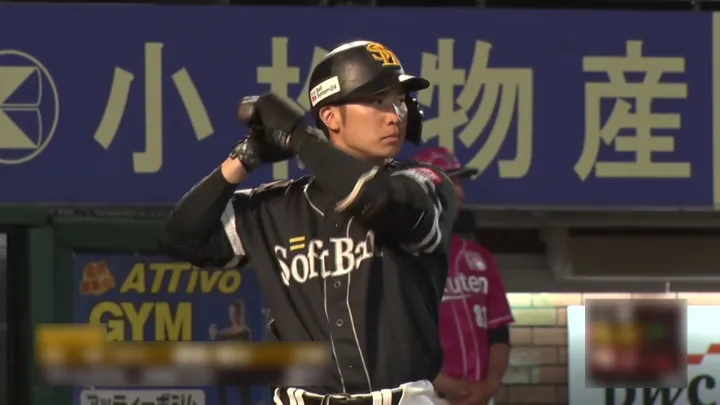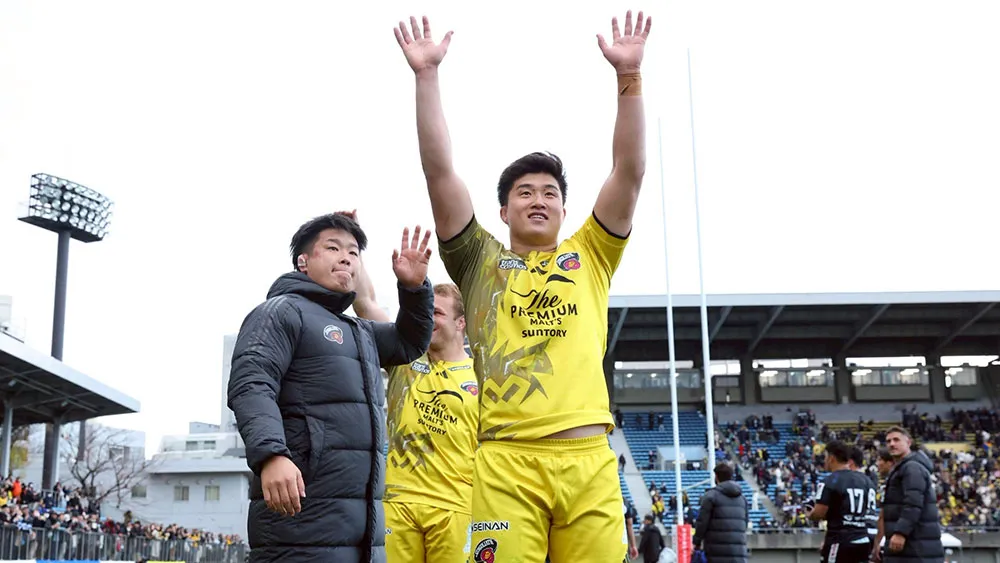
Professional baseball has entered the off-season, but there are many sports whose seasons start in the winter. Rugby's top league, League One, is one of them. So, this time, we spoke to Koji Shimokawa, a young flanker for the Tokyo Suntory Sungoliaths and one of the biggest professional baseball fans in the rugby world, about his memories of professional baseball and his enthusiasm for the start of League One. Keep an eye out for Shimokawa, who is expected to do well on the Japanese national rugby team, as he talks about his love The Hawks.
◇ ◇ ◇
Enchanted by Nobuhiko Matsunaka's grand slam
――You have been a professional baseball fan since childhood, especially The Hawks, can you tell us about your memories of watching baseball games at that time?
The reason I fell in love with baseball was that there was a team called The Hawks in my hometown. My parents' home was about a 10-minute bicycle ride from Yahoo Dome (now MIZUHO PayPay Dome FUKUOKA), so I was close to them. At home, I watched it on TV every day, even on weekdays, in time for the 6 o'clock play ball when I came home from playing in the evening. The most memorable one I saw there was the 2011 "Pacific League Climax Series Finals" Game 2, The Hawks vs. The Lions match. In the bottom of the eighth inning, with two outs and bases loaded, Nobuhiko Matsunaka hit a grand slam from rookie Kazuhisa Makita pitcher. I vividly remember watching it from behind the backstop.
-- That was an amazing scene. What was it about watching baseball that appealed to you at that time?
When I was in elementary school, the appeal of watching a game was learning and singing the cheers together. It wasn't just The Hawks, but back then we all thought The Marines cheering was cool, and the chance themes of players Tsuyoshi Nishioka, Toshiaki Imae, and Kazuya Fukuura were all staples for us.
-- The Chance theme is still considered a classic. Has your perspective on baseball changed since you became an adult?
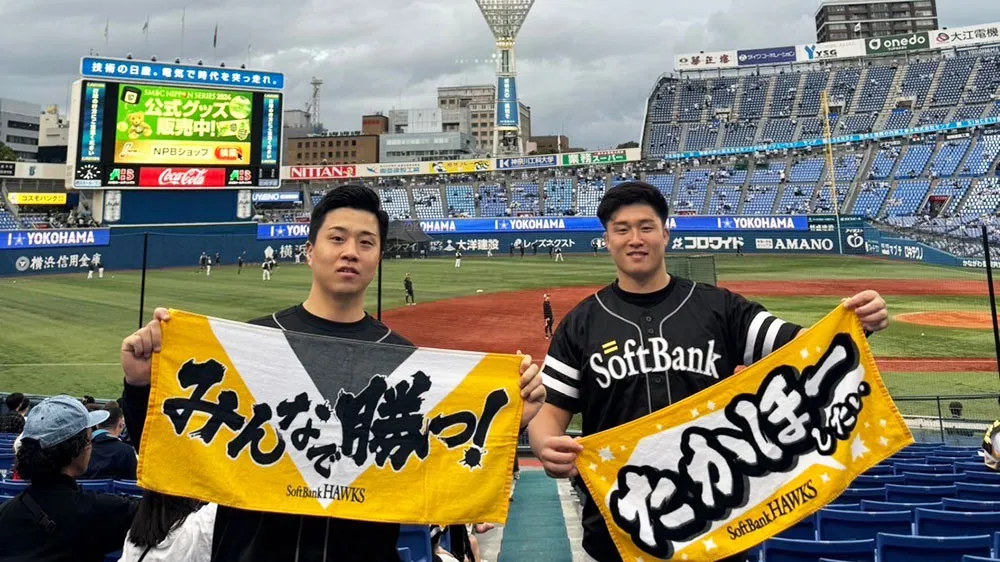
Yes, my perspective changed when my friends who started playing baseball in junior high and high school started using breaking ball. I started paying attention not only to struck out, but also to the techniques and types of pitches used to force the opponent to hit the breaking ball. Rugby is fast-paced and the play is basically nonstop, whereas baseball has elements that rugby doesn't have, such as "time," "tactics," and "pickoff" between pitcher and batter, which I find interesting.
![Shimokawa (right) watches the race. [Photo provided by Shimokawa]](https://media.insight.pacificleague.com/webp/ffuIbhPsMVYUSKbruppgKrMk7H0dU5W0lE3zHRX5.webp)
-- Does rugby rarely change tactics during a match?
Basically, all rugby tactics and analysis of the opponent are completed before the game. Of course, tactics change every game to accommodate the opponent, but once the game starts, you need to hit the ground running with what you have prepared in advance and respond to any unexpected plays. For example, if the opponent suddenly makes a sign play that you have never seen before.
-- Which position does the player in charge of giving instructions in irregular situations?
Basically, the player number 10, the standoff (SO) player, is responsible for this. The standoff is responsible for deciding on signing plays and setting up the development of the game, always looking around, knowing the space to attack, and giving instructions. If you are watching rugby for the first time, it may be easier to understand if you pay attention to the movements of the No. 10, who shakes his head, moves his eyes, and communicates with his teammates.
An unexpected connection to baseball world
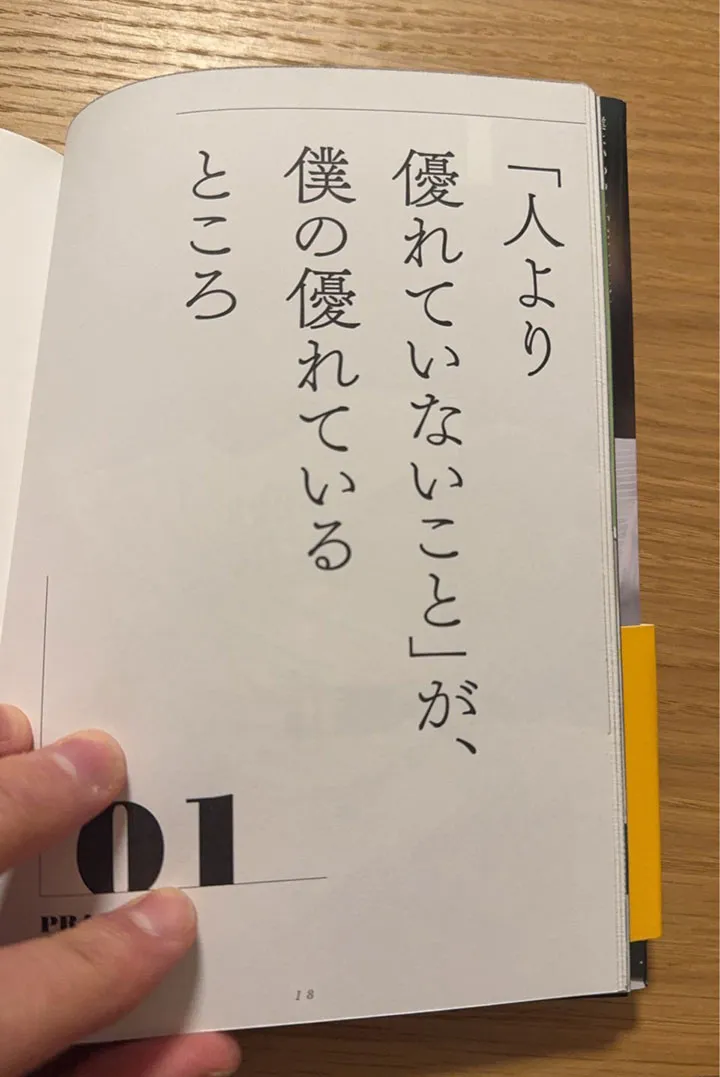
――Going back to the topic of baseball, you said you read "That's why I practice: A challenge to get closer to the geniuses" written by Takeshi Wada of The Hawks, who was your senior at university. How did it affect you?
The reason I read Wada's book was because I wanted to know why he had been able to have such a long career. I was influenced by the words in his book: "The fact that I'm not better than others is what makes me better." I believe that it was because Wada had this in mind even while in college that he was able to carve out his own path to becoming a professional, and continue to work hard and pay attention to the small details, allowing him to have such a long career.
I can relate to myself, as there are many foreign players in the flanker position, and there was a time when I struggled with the lack of physical ability, but after becoming a professional and encountering this book, I was reminded of something important, and I once again came to respect the players. I then decided to "stop aiming to be a player with an unbridgeable gap, and instead do what only I can do now."

--Specifically, what strengths have you honed?
Because I don't have overwhelming physical strength or speed, my strength is the hard work I do when I don't have the ball. I value the awareness of working hard on the small details that anyone can do. Although we play different sports, Wada-san has made me think, "I want to be a player like him."
--Are there any other baseball players that you have a special attachment to?
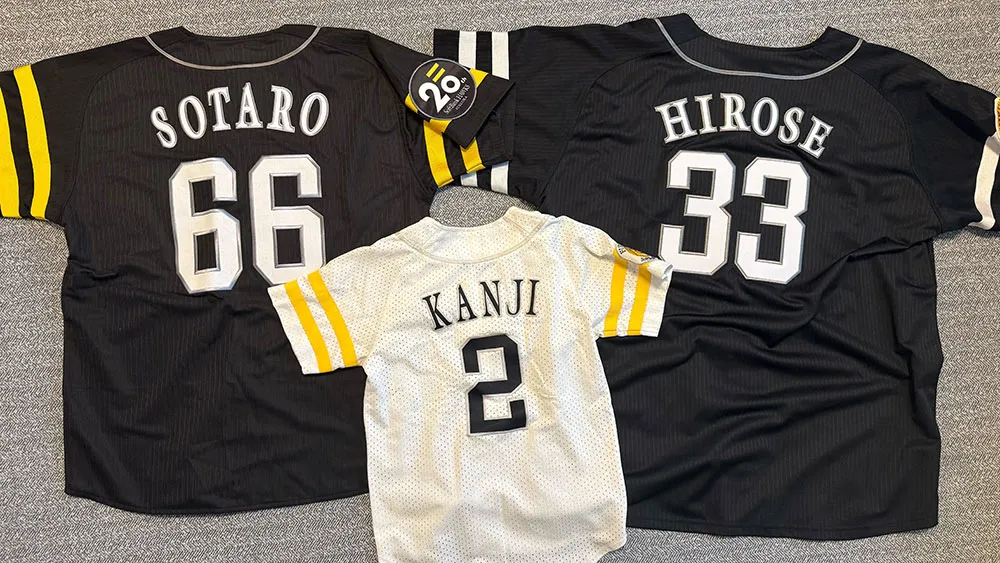
One of jersey I still have is that of Kenji Jojima, The Hawks 'number 2 jersey, with my name tattooed on it. Then, Nobuhiko Matsunaka was my favorite player. I remember the first jersey I ever owned was that of Kazumi Saito, bought for me by my grandmother. These are players I grew to like because, as an elementary school student, I thought "strong players are cool."
Speaking of active players, I had the opportunity to speak with Hokkaido Nippon-Ham player Kotaro Kiyomiya Kiyomiya when he accompanied my father, Katsuyuki Kiyomiya, to the Waseda University Rugby Club Alumni General Meeting, and I was touched that he remembered my name.
Also, actually, Fukuoka Softbank 's Ryuta Hirose is my second cousin. He lived in Tokyo and I lived in Fukuoka until high school, but now we're based in opposite places, so we've never really talked... In college baseball, there's the Waseda-Keio game. When my alma mater, Waseda, played against Keio, I had a mixture of feelings of wanting Waseda to win and wanting Hirose to do well (laughs). As a The Hawks fan, I'm very happy that he joined The Hawks.

--This is a hypothetical question, but if you had become a baseball player while still having the physical condition you have now, what kind of player do you think you would have been?
Shimokawa: I think I would have become catcher, taking advantage of my strong physique as a rugby player. I wouldn't have lost in blocking (laughs).
--Naturally, you have a strong arm, so I think you could have become a good catcher (laughs).
"I want to win the opening game this year and gain confidence."
--You participated in the Pacific Nations Cup 2025 in August and September this year, and the European tour in October and November. How did your experience at international tournaments change you?
It was a high-level match, with the opponents not missing a single mistake, giving them a chance to score. This also made me realize the importance of paying attention to the small details. Physical strength and attention to detail are issues I learned from playing in international matches, and I am making adjustments as I play more games.
How is the team doing this season?
The Sungoliath have three spirits: "PRIDE," "RESPECT," and "NEVER GIVE UP," and we continue to work based on these both on and off ground. We have been preparing to surpass our opponents not only in terms of technique but also in terms of mindset. Last year, we had a stretch of winless season even before the start of the season, but this year we want to win the opening game and gain confidence.
![[Photo: provided by the team]](https://media.insight.pacificleague.com/webp/KyWZdVBkqDQniiz6I5j6GxUmTgDTMS3khL0MC0uK.webp)
--This year's Sungoliath team captain is Sam Cane, who has experience as captain of the New Zealand national team and has 104 caps for the All Blacks. There's also a lot of buzz surrounding the return of Tevita Tatafu from France's Top 14. How have you been influenced by these experienced players?
I'm really impressed by Kane's attention to detail in his play. I also learn a lot from his relentless physicality in the breakdown after a tackle and his attitude of never giving up the ball.
--You're both flankers, Kane, but do you feel any sense of rivalry with him?
They are both teammates and rivals. The Sungoliath have a history of fierce competition within the team raising the team's level and leading to victories, so I believe that this year too, having strong competition within the team will make both the team and the individuals stronger.
Tatafu is an overwhelmingly amazing player, a one-of-a-kind player who no one can imitate. He is a player who gives the team momentum and helps them avoid trouble.
![[Photo: provided by the team]](https://media.insight.pacificleague.com/webp/RLmlVeVqpMwpjsSmXAqpIDrDyEDbelGd3UBIpEc1.webp)
-- As for the opening game, this year it will start as a away game.
Our opening match against the Ricoh Black Rams is a team we lost to last season, so we are determined to win. Their key player, No. 9 (scrum half) TJ Perenara from New Zealand, is the key player who gives the team momentum and control, so it will be important to put pressure on him. Personally, I think it's important to get the ball in set plays (scrums and lineouts) and secure attacking opportunities for the team.
--The opening match as host (Ajinomoto Stadium) will be against Toyota Verblitz on December 20th.
Toyota Verblitz also has key players in the number 9 and 10 positions who play a key role in setting up the game. The key will be to prevent Kazuki Himeno from having an opportunity to steal the ball (a technique used to steal the ball from a player who has fallen during a tackle).
Our next host game will be against the Kobelco Kobe Steelers on January 11th, in Round 4. They are a strong team, coming in third last year, and this season they have added two active New Zealand national team players, as well as a Japanese national team player, making them a talented team. We want to fight against them without forgetting that we are the challengers.
At host games, the stands are filled with supporters clad in the team's yellow merchandise, cheering on the team, and it's a moment that boosts the players' motivation. It makes them want to win for the fans and give it their all all year long.
![[Photo: provided by the team]](https://media.insight.pacificleague.com/webp/VObFtU8p3mpdf5Hr577CJbZkTaj4LnqnHflTwvWn.webp)
- What are your personal goals for this season?
Of course, the team's main goal is to win. To that end, my personal priority is to play in as many games as possible and contribute to the team through my play. One issue that remains to be addressed after the international tournament is maintaining a high level of wall tackle success rate. I would like to continue practicing and raise my standard.
--Finally, please give a message to professional baseball fans about the appeal of watching rugby.
You're probably used to singing cheering songs out loud when watching baseball, but the style of watching rugby is a little different. While the game is in progress, there's generally no cheering out loud, and you just watch the game. I want to convey to professional baseball fans that there's a different way to enjoy rugby than the sound of the ball hitting the ground or cheering songs in baseball- the dull thud of players colliding with each other. The rules are complicated, but I'd be happy if at first they could get interested in the sound and the collisions, thinking of it as "coming to watch a martial art using a ball."
Interview and text by Yu Ebihara
Profile of Koji Shimokawa
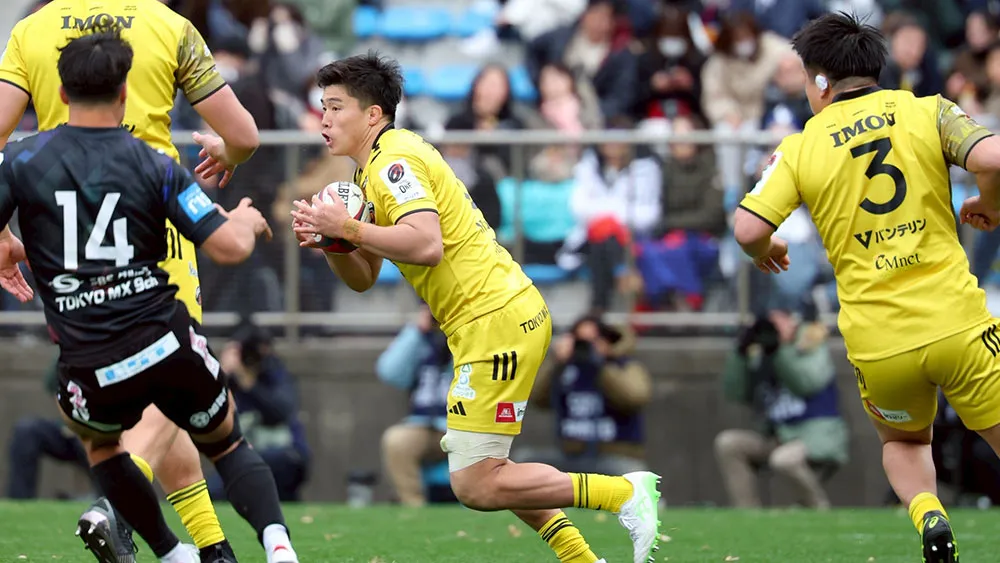
He graduated from Shuyukan High School in Fukuoka and went on to Waseda University, before joining the Suntory Sungoliath (now the Tokyo Suntory Sungoliath) in 2021. He earned his first cap for the Japanese national team as a substitute in the match against New Zealand in the Lipovitan D Challenge Cup 2022, and has since become a promising young player who has shone in international competitions. His position is flanker (FL).
Tokyo Suntory Sungoliath Host Game Special Offer for Rounds 2 and 4
Support the Tokyo Suntory Sungoliath and Shimokawa at the host game!
Target matches: Tokyo Suntory Sungoliath host games Rounds 2 and 4
Invitation seat type: Lower level unreserved seats behind the goal B (north/south)
Maximum number of tickets that can be exchanged: Up to two tickets per game. The third ticket and above will be priced at 1,000 yen.
Preferred seat sales type: Back A unreserved seats
Adults: 2,000 yen, Junior and Senior High School Students: 1,500 yen, Elementary School Students: Free
Application period: Round 2 until 23:59 on Friday, December 19, 2025
Round 4: Until 23:59 on Friday, January 9, 2026
https://ticketrugby.jp/campaign/sungoliath2025-26_hg_aji?ser=69z5wg1ch
Related Links
・ JAPAN RUGBY LEAGUE ONE Official Website
・ Tokyo Suntory Sungoliath Official Website
![Tokyo Suntory Sungoliath player Koji Shimokawa [Photo: provided by the team]](https://media.insight.pacificleague.com/webp/4AIo0y2ZveaVaKTnukeVLZxOhruEQoYkMr5Z1RLU.webp)