The dramatic life story of the SNS manager who became a bridge between Japan and the Australian WBC team, who call Fuchu their "second home."

Pacific League Insight

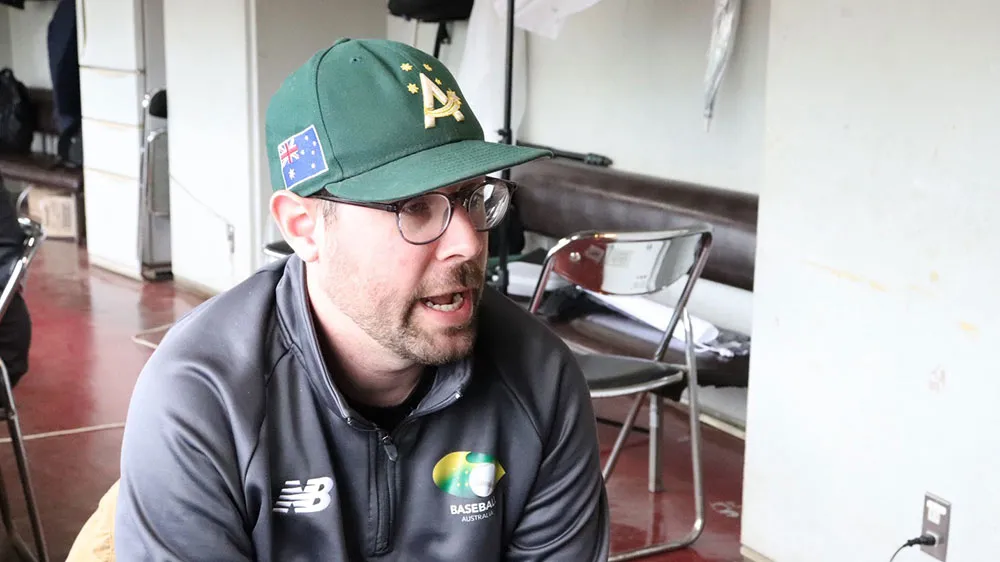
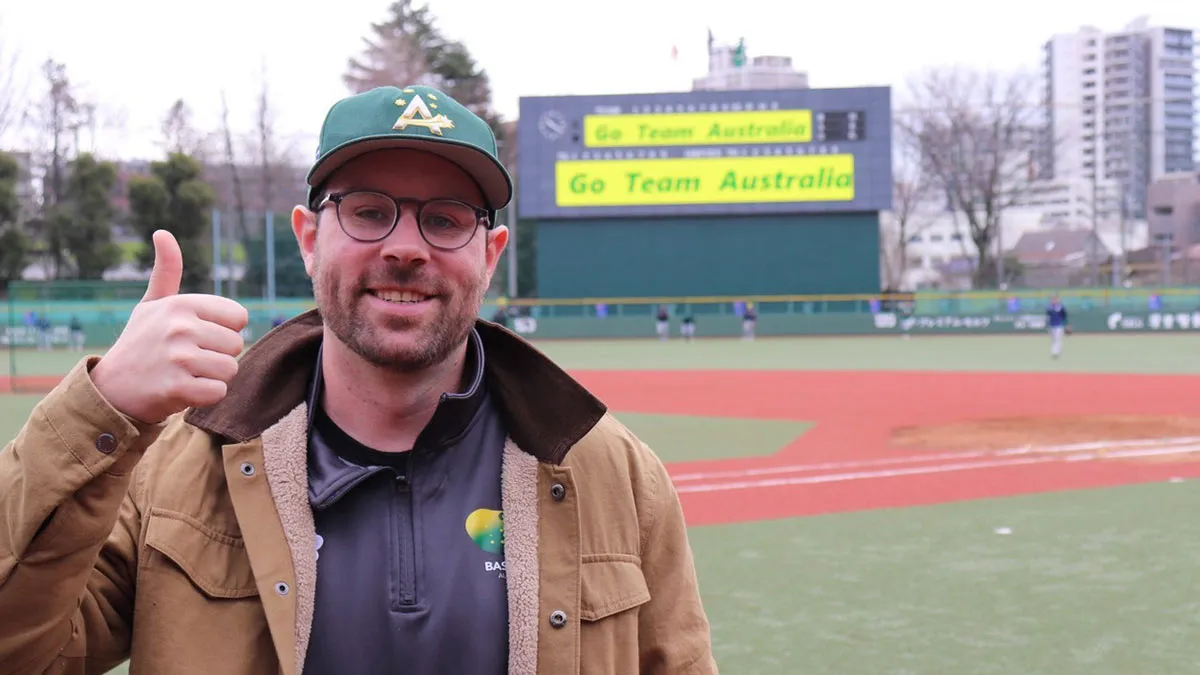
Eric Barner, Broadcast and Digital Content Manager, baseball Australia ©PLM

The Tokyo Pool of the 2026 World Baseball Classic (WBC), a five-day intense competition, has come to a close. Each of the five participating countries has its own story, and many people found the appeal of baseball in these stories. One country, in particular, captivated many baseball fans: Australia, which narrowly missed reaching the quarterfinals after a fierce battle with South Korea on the 9th. While their performance was noteworthy, one reason Australia is attracting attention is their use of Japanese in their social media posts (X: @TeamAusBaseball).

This time, Takashi Takagi, who is involved in media rights business including overseas at Pacific League Marketing, interviewed Eric Barner, the mastermind behind the project, in Fuchu, where the national team was holding its training camp.


◇ ◇

February 2026, Fuchu City, Tokyo. More than 3,000 fans packed the training camp site of the Australian national team, who were preparing for the WBC, for a practice game. One man watched the passionate "Australia chants" from the stands with a look of deep emotion.

Eric Barner, the Broadcast and Digital Content Manager for baseball Australia, is now a bridge connecting Australia and Japan, overcoming language barriers.

"People support 'human beings'."

Eric's passion for journalism was ignited in Guelph, Ontario, Canada. He lived in an environment where a hockey field was a five-minute walk away, and ball park another five minutes away. As a boy, Eric would sit in the stands with a portable recorder, practicing his commentary skills alone. His interest wasn't simply in winning or losing, but in the very act of expression itself—"how can I put this moment into words to reach people?" Later, his experience studying journalism at university would shape his current public relations philosophy.

"Ultimately, I think it all comes down to 'connections.' People who watch sports want to know what kind of 'people' are playing. Whether I'm writing an article, tweeting, or doing live commentary, having background information and insights into each individual player is paramount. People support the team, but even more than that, they support the 'people' behind it."

"The most important skill I learned at university was 'questioning what true humanity is.' I believe that's the most important thing. Everything starts with people. That's my belief."

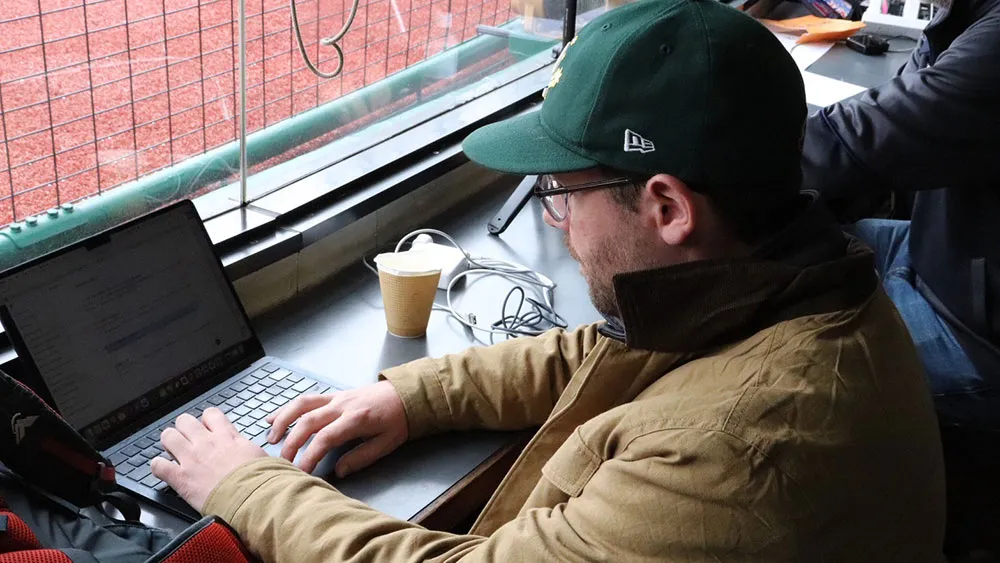
Mr. Barner speaks about the importance of sports journalism ©PLM

The "shark logo" that changed their destiny, and their sudden debut

In 2014, Eric left his native Canada for Adelaide, Australia. But in fact, he didn't even know there was a "baseball" in this country at the time.

"I rented a house and thought, 'I need to find a job,' so I walked down the local street. Then I saw a big sign with the logo 'Sharks and baseball balls. I thought, 'What, baseball in Australia? I thought, 'No way. It was the logo of the Adelaide Bites (now the Adelaide Giants), a team in the Australian Baseball League (ABL).

I was led into the office and asked, "I have experience in broadcasting and journalism. Do you have a job?" I asked. The staff laughed and replied, "There are no jobs at .

No, we don't have any jobs at baseball, but we welcome volunteers. But volunteers are welcome.

Eric, who was looking for community, immediately said, "Sure, I'll help. Then things took a turn for the worse. He asked, "...... So, can you come tonight? Our announcer is out with a cold."

A few hours later, Eric was sitting in the field announcer's seat. This was the beginning of his Australian baseball life, and after a season of volunteering, a vacancy presented Eric with a great opportunity.

He said, "I really did everything from putting on the costume, to selling tickets, to sponsor sales, to running the operation, to managing the volunteers. What I learned from this experience is that baseball in Australia is a community based on 'passion. If you want to accomplish something, you have to be versatile. The person who maintains the field sells food at the concession stand, attends games, teaches children, and develops sponsorship acquisition plans. I was taught on the field the importance of taking on many roles to better the community."

Eric was working as the general manager of operations for the team when the pandemic lockdown hit. During that time when the world stopped, he, like many others, was in a state of deep self-doubt.

During the lockdown," he says, "I found myself reassessing, 'When will the world start moving again, and will I be able to do it? 'What do I really want to do when the world starts moving again someday?' I've always been a storyteller. I had originally built my career to be a storyteller. But before I knew it, I had drifted away from that starting point. You only live once. Then I should do what I am truly passionate about. So I made up my mind and returned to the field.

The true faces of the players, revealed only by "insiders".

It was because of that decision that we have the 2023 WBC and the present day in 2026. Why do Eric's social media posts resonate so deeply with the Japanese people? The reason is that he is an "insider" who shares the same experiences as the players.

"People appreciate the 'insider view' that only someone like me, who travels with the players, can offer, rather than being an outsider. While the 2023 WBC was entirely broadcast in English, when I returned to Japan for the 'Asia Professional baseball Championship' at the end of that year, I decided to use Google Translate to broadcast in Japanese. I wanted to directly convey to the Japanese people what kind of people the Australian players are. They are amazing players who are desperately trying to balance their work, family, and baseball. They don't play in front of huge crowds in Australia, but I was truly happy that the Japanese people wanted to learn more about them."

Eric's team has achieved phenomenal results in the digital transformation of Australian baseball. During this year's WBC, their official social media accounts garnered over 60 million impressions, recording record-breaking traffic and reaching millions of users.

Mr. Barner organizes a Q&A session between Japanese fans and Australian national team players and posts it on X (formerly Twitter) ©PLM

The relationship between Australia and Japan is a "story of curiosity."

Looking ahead to the 2026 WBC, Eric defined himself as the "head storyteller" and described the relationship between the two countries as follows:

"I think this story is a 'story of curiosity.' The Japanese are curious about Australian baseball culture, and the players are curious about Japanese culture, food, and stadiums. It's a two-way street."

We are still learning about Japanese baseball culture. Recently, we learned that Japanese fans have been creating cheering songs for us. Next time we come, we will need more merchandise, and maybe a list of songs we can sing together. We are in a stage where we are learning from each other."

At the heart of it all is an absolute respect for Japanese baseball. "All the players growing up in Australia believe that Japan is the best baseball country in the world. They believe that both the play and the culture are the best. So they want to show their respect for Japan through their play."

In 2026, Fuchu City will become my "second home."

Now, that bond has come to fruition in Fuchu City, Tokyo. The number of fans who packed into Sunday's practice match surprised Eric.

"Yesterday, we had 3,000 fans in attendance. That's more than any game in the Australian Professional League (ABL). The players feel like this is their 'second home.' Even when they walk around town, they feel like they've come home."

This interaction extends beyond the stadium. Visits to local schools by the players have also become an essential part of the team's activities.

"When we visit schools and see the children's smiles, it's as if the 'boy who just started playing baseball' within our players is awakened. baseball is a minor sport in Australia, but everyone here shares the same passion. We feel like we are now fighting not only on behalf of Australia, but also on behalf of the Fuchu community."

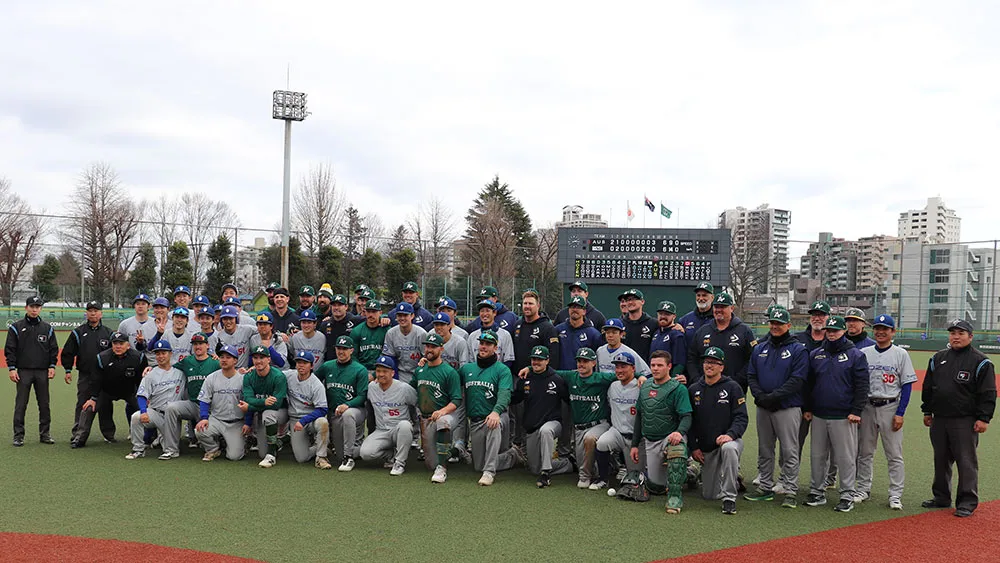
The Australian national team and a corporate baseball team pose for a commemorative photo after a practice game. 3GoodGroup HOZEN noLimiteds ©PLM

The power to keep saying "YES" to opportunities

At the end of the interview, we asked him about what he is most proud of in his career so far.

"Throughout my career, I've consistently said 'yes' to many things, rather than 'no.' That's how I've become deeply involved in baseball, interacting with volunteers, fans, sponsors, and people from all walks of life. Thanks to that, I think I've developed the versatility to deeply understand the psychology of the media, sponsors, and fans. That might be my greatest pride."

Eric Barner. A man who dedicated his one and only life to "storytelling," he continues to transcend language barriers and connect the hearts of those who chase the white ball.

Interview and text: Takashi Takagi

Featured
Featured
Pacific League News

The dramatic life story of the SNS manager who became a bridge between Japan and the Australian WBC team, who call Fuchu their "second home."