Many players from Central and South America have played and made their mark on Japanese professional baseball history. Furthermore, Venezuela's victory in the quarterfinals of the "2026 WORLD BASEBALL CLASSIC™" held in March of this year, where they defeated Japan, has made Central and South American baseball more familiar to Japanese baseball fans.
What's interesting is how Japanese professional baseball is viewed by media, baseball fans, and players in Central and South America. This time, we spoke with Leonte Landino, who has covered baseball players from all over the world for many years for Central and South American media, to get his firsthand opinions on the current state of Japanese professional baseball 's popularity and notable Japanese players.
Three reasons why Japanese professional baseball is gaining popularity in Central and South America
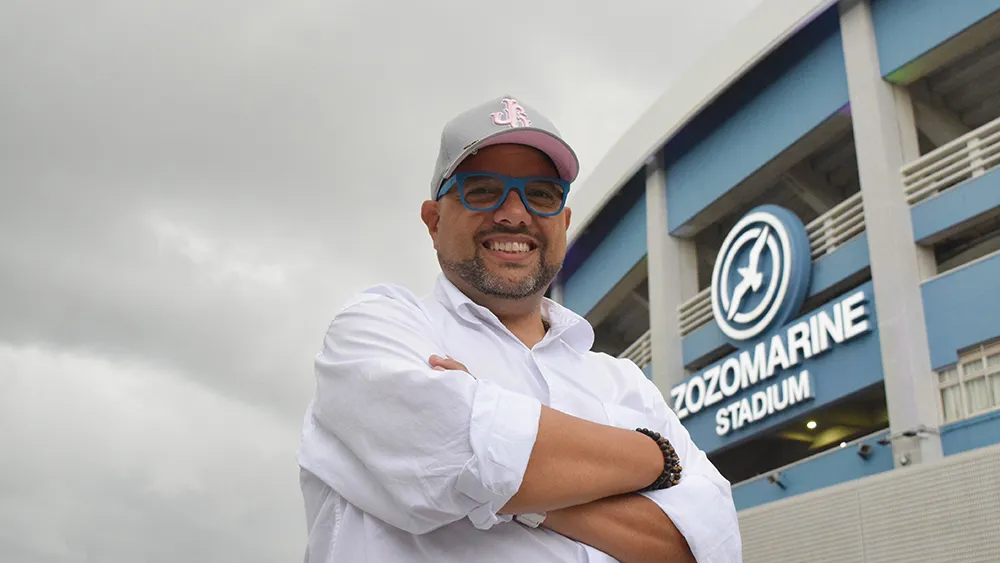
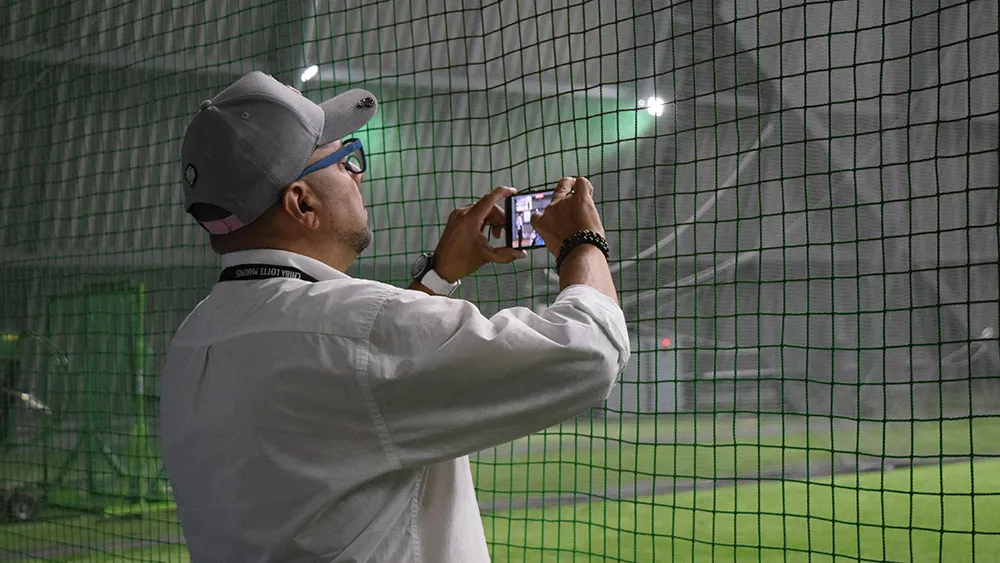
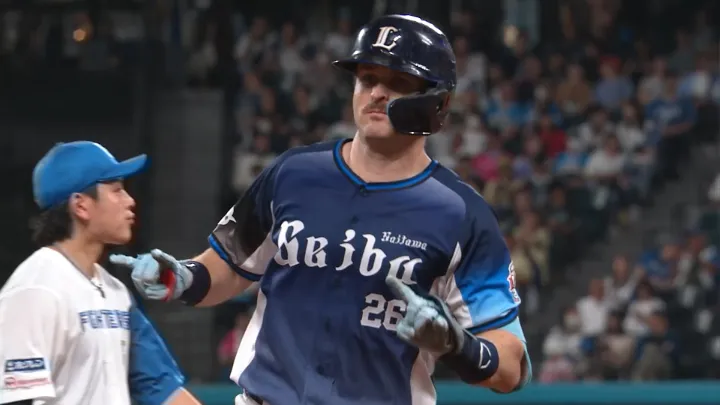
On this day, Randino was at Zozo Marine Stadium to interview Neftalí Soto Soto (Chiba Lotte Marines). Soto, who became the captain of Chiba Lotte Marines this season and achieved his 200th Home Run run in NPB in June, has been building a wonderful career in Japan. Randino was filming an interview video to share with local fans Soto's feelings towards his home country and a message to Central and South American players who aspire to play in Japan.
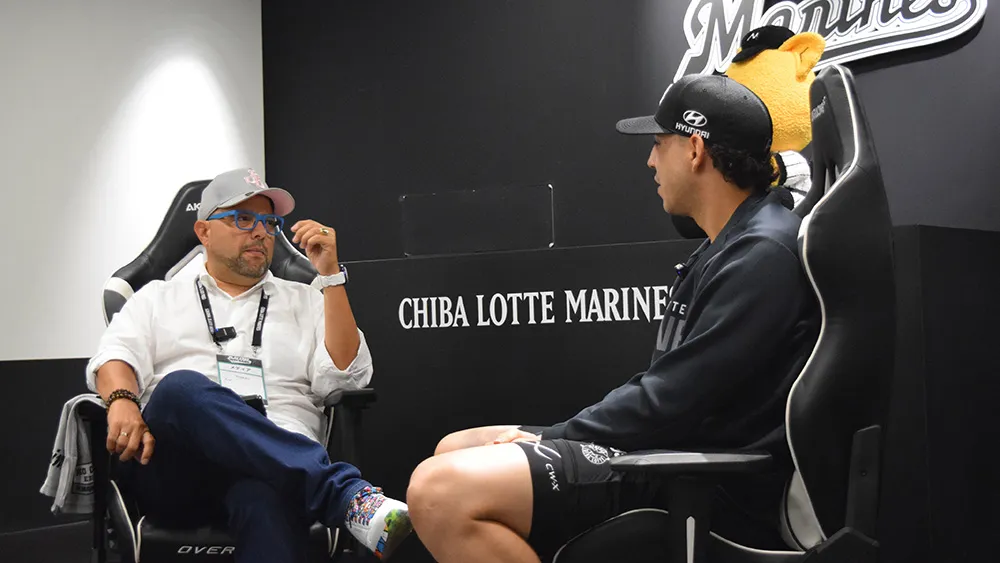
With the development of digital media, players can now be delivered to their home countries as footage, and from 2024, broadcasting and streaming Pacific League-hosted matches will begin in Latin America. While touchpoints connecting baseball fans in the region and Japan Professional baseball are increasing, how deeply has Japan Professional baseball become locally? Mr. Randino clearly stated, "Compared to the past, interest has definitely increased," explaining the reasons behind this.
"First of all, the establishment of broadcasting and streaming environments is a huge advantage. You can easily watch Pacific League matches and learn detailed results of each player in real time. In the past, this kind of information would arrive late. Currently, we are still at the stage of helping people understand the general framework of Nippon Pro baseball, but I believe going forward, we will be able to support specific teams or individual players."
Additionally, Randino believes that one of the factors is that AI and translation apps have made it easy for anyone to translate. Furthermore, he cited Alex Cabrera, who played for three NPB teams including the Saitama Seibu Lions, and Alex Ramirez, who became the first player to reach 2,000 hit in Japan as a foreign-player player.
"Even while playing in NPB, Cabrera played in the Venezuelan Winter League during the offseason, so news about him reached Venezuela as well, like 'I heard he hit home run 50 home runs in Japan!' And Ramirez joining the Japan Professional baseball Meikyukai was also big news locally. There are many superstars in Latin America, but at this point, he is the only one in Japanese baseball who has reached that level. The achievements of these legends are also an important factor."
With these various elements stacking up, the appeal of Japanese professional baseball seems to be steadily being conveyed, albeit little by little. Landino himself said he experienced an experience where he truly felt the spread of the sport.
"Before this year's WBC, we conducted surveys among fans in Venezuela, Puerto Rico, the Dominican Republic, Mexico, and Cuba about the starting line-up of participating countries. The project itself was very lively, but I never imagined so many people would have opinions about the Japan national team. Opinions such as 'This player should protect the first baseman' and 'Is Kazuma Okamoto first baseman or third? Why is that?' This is proof that the Japanese professional baseball has reached the people of Latin America."
What are the surprising similarities between Central and South American baseball and Japanese baseball?

So, how do baseball fans in Latin America view Japanese professional baseball?
Randino said, "I watch with a sense of familiarity," revealing, "You might think, 'Really?', but actually, Latin American baseball and Japanese baseball play styles are very similar." Many Japanese fans surely have the image of Latin American baseball as a "treasure trove of power hitters." However, the essence is different.
"Power hitters are limited to players who have moved from Latin America to NPB. NPB teams have long acquired many so-called "big hitters" like Cabrera and Ramirez, so Japanese fans have that image. Indeed, there are more players with superior power compared to Japan. But in reality, Caribbean Baseball features many players like Luis Araez (San Francisco Giants) who excel in contact and defense-type players like former MLB star short stop Omar Biskel. In the 'Caribbean Series,' which determines the champion of the Latin American Winter League, they actively use secure, winning strategies like bunting and end-runs, so there are many similarities with Japanese baseball.
Moreover, the baseball of Nippon Pro is not only popular among fans. Recently, NPB's position among players playing in Latin America has also begun to shift.
"Today, interest in NPB among Latin players has increased compared to the past, and this is interesting for us media. To be honest, in the past, some players viewed signing with Japanese teams negatively. But now, many players see it as a big opportunity. Many players even tell me, 'I want to go to Japan!' You never heard those voices back then."
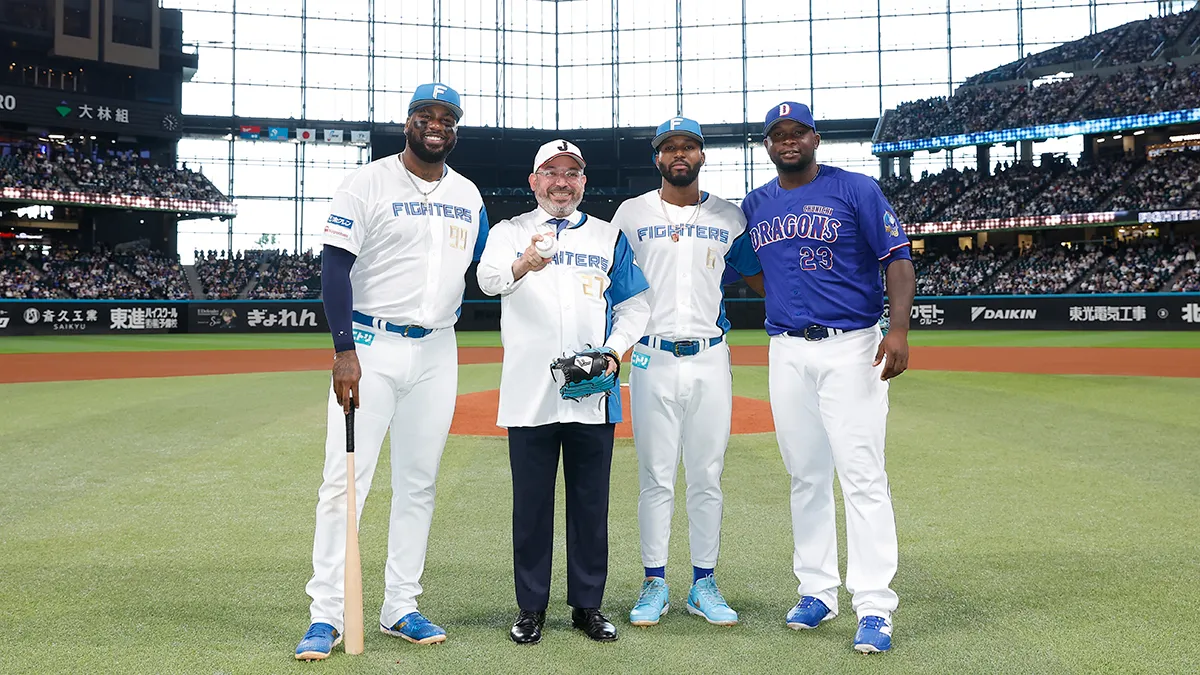
In fact, many players such as Andrés Machado pitcher (Orix Buffaloes), Liván Moinelo pitcher (Fukuoka Softbank), Ariel Martínez (Hokkaido Nippon-Ham), Alexander Armenta pitcher (Fukuoka Softbank), Ryder Martinez pitcher (The Giants), and Alberto Abreu pitcher (Chunichi) have earned trust by achieving stable results in NPB and earning their home national team selections. In the past, many players set their sights solely on playing in MLB, but now that Japan Pro baseball has begun to spread, career options seem to be expanding.
So, which Japanese player should we be keeping an eye on? "Someone who has the potential to succeed in MLB in the future."
Finally, when we asked Randino, who travels around the world following baseball every day, about Japanese players to watch, he mentioned two names.
"First, there's Shugo Maki (Yokohama DeNA). He's very consistent and can get hits no matter what kind of pitcher he's up against. I think he's the next Japanese player who can succeed in MLB. I'm also keeping an eye on Chusei Mannami (Hokkaido Nippon-Ham). Manami is also a very versatile player and I think he's making a big contribution to the team. He's been a catalyst for the team, which has a great mentality under manager Tsuyoshi Shinjo, and I think he, too, has the potential to become a player who can succeed in MLB in the future."
Thanks to improvements in broadcasting and streaming infrastructure, technological advancements, and the contributions of legends, Japanese professional baseball, once a distant league with no connection to many, has become more accessible and is transforming into a "new stage for challenges" for players from Central and South America. We can expect to see even more players from Central and South America flourish in Pacific League and other NPB leagues in the future.
Interview and text by Manyuko Goto


![[Hawks Championship Commemorative Events and Merchandise Released] Today's Pacific League [September 17]](https://media.insight.pacificleague.com/webp/l3A7WgVUBxbO6j9Jai4VMA7HHsoicmJQQ7xmfA0P.webp)
![[Hawks Win Farm League Western Division Title] Today's Pacific League [September 16]](https://media.insight.pacificleague.com/webp/7Judq84jIui3POny62QhiZo41lKhID8XszIpR0N2.webp)

![[Full Championship Interview] What triggered their success... Ryoya Kurihara, Ryosuke Otsu, and Tomoya Masaki look back on this season](https://media.insight.pacificleague.com/webp/htL7xo0sBRfObFOLadYVxjWxUBihgKBxjWk0ywRJ.webp)
![[Full Text of the Championship Press Conference] Manager Hiroki Kokubo: "My worst-case predictions didn't come true at all" — A summary of this season's three-peat](https://media.insight.pacificleague.com/webp/xKs3BpaIoyoUSzX72T0ljJDeqbzQH9x8WCEJaoID.webp)