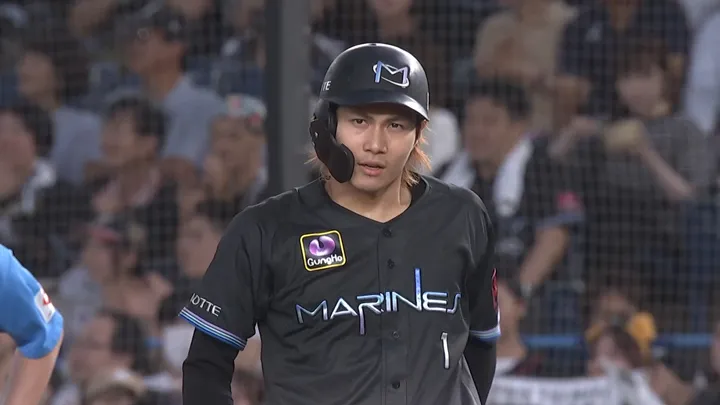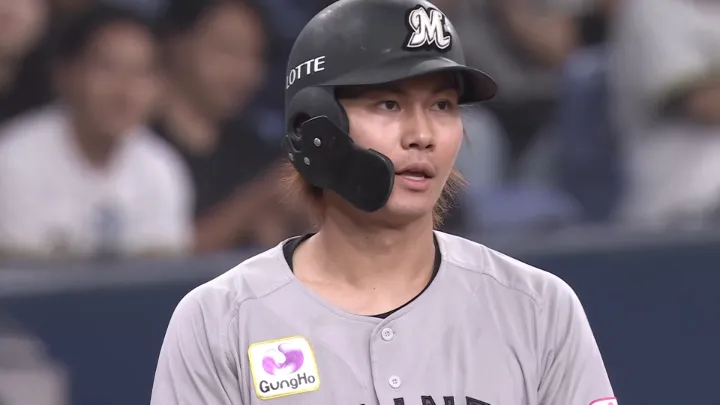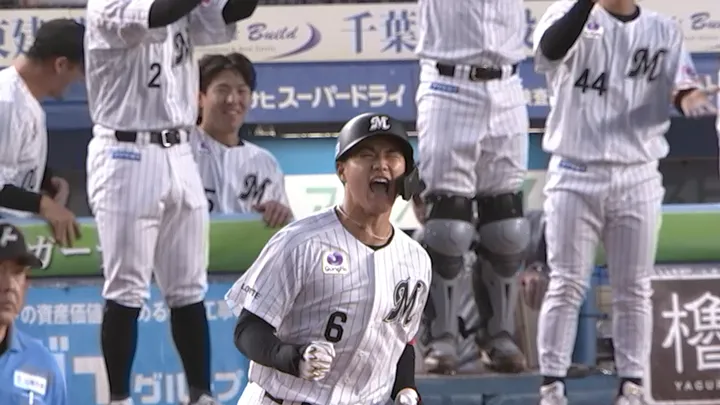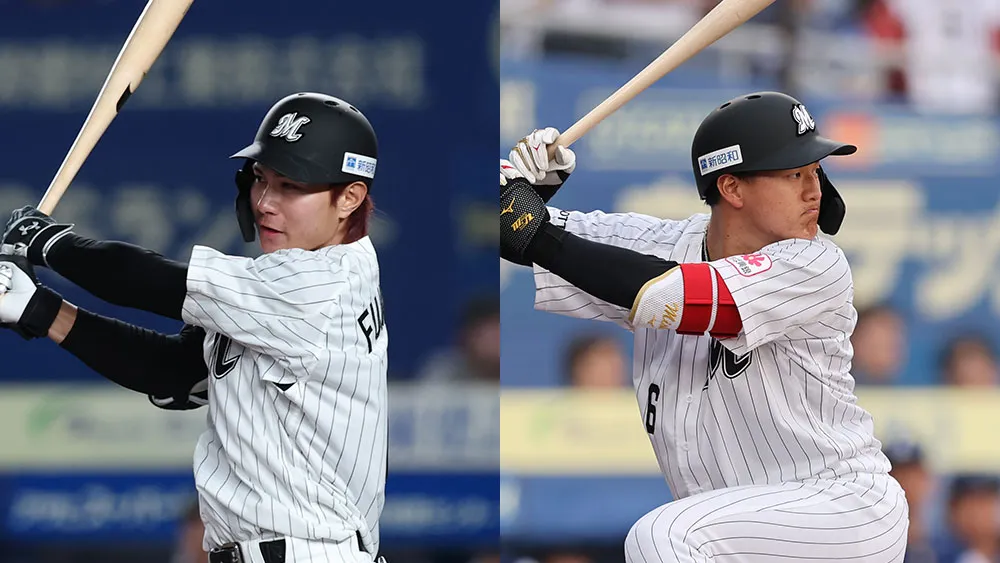
Chiba Lotte Marines' 1st and 2nd batters are both performing well, ranking high in batting average.
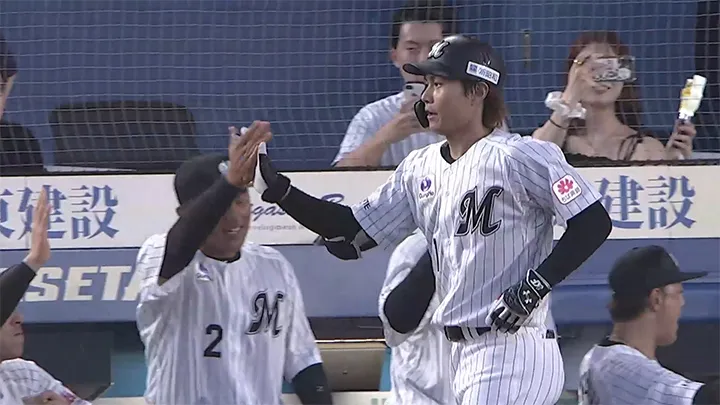
Chiba Lotte Marines the first performer Kyota Fujiwara The player and No. 2 hitter Misho Nishikawa Both players are performing exceptionally well, ranking high in the batting average standings. The fact that these two players—who represent the new generation set to lead the Chiba Lotte Marines—are excelling offers a ray of hope for a team that has been struggling.
In this article, we take a look at the various statistics Fujiwara and Nishikawa have accumulated throughout their careers, as well as their progress this season. We explore the commonalities between this young 1-2 batting combination and the reasons behind their strong performance. (*Statistics are current as of the end of the game on April 28.)
His aggressive hitting style was his trademark, but this season his plate discipline has also improved significantly.
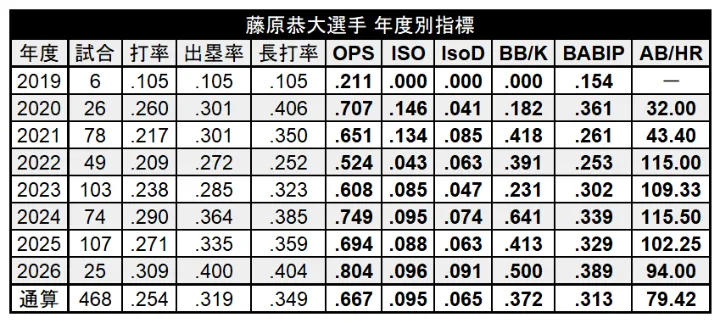
The following are the various metrics that Fujiwara has recorded throughout his career.

His career batting average was .254, his career on-base percentage was .319, and his IsoD (Isolated Soul Defense), an indicator showing the difference between batting average and on-base percentage, was .065. None of these figures are particularly high. These numbers suggest that he has been characterized by an aggressive batting style rather than one of carefully watching the ball.
Furthermore, in terms of slugging percentage, he only exceeded .400 once in the seven years leading up to 2025, in 2020. As a result, his career OPS was a relatively low .667, and even in 2025, the year he reached the required number of plate appearances for the first time, his OPS was slightly below .700, indicating that he had some issues in terms of productivity as hitter.
However, this season his on-base percentage has increased to .400 compared to his batting average of .309, indicating he has drawn Walk, and his IsoD has reached a career high of .091. In addition, his BB/K ratio, one of the indicators of plate discipline calculated by dividing Walk struck out, is .500 this season, significantly above his career average, showing a remarkable improvement in his plate discipline.
Furthermore, his slugging percentage shows he's hitter generates more bases. His ISO (Isolated Slugging Percentage), which removes the impact of single hit from slugging percentage, is also higher this season at .096. Along with improved plate discipline and power, his OPS has also risen dramatically to .804.
From 2023 onwards, BABIP will improve, allowing him to make full use of his characteristics as a fast left-handed hitter
Next, let's look at the "BABIP" metric, which shows the percentage of Home Run balls that become hit, excluding home runs. BABIP is generally considered to be heavily influenced by luck, but fast left-handed hitter are more likely to get infield hit, and players who hit the ball with high speed, tend to record excellent numbers.
Fujiwara's BABIP in 2021 was .261 and in 2022 it was .253, both significantly below the generally accepted benchmark of .300. This likely contributed to his low batting average during this period. However, from 2023 to 2025, he recorded figures above the benchmark for three consecutive years, and his batting average rose accordingly. It could be argued that his improved contact ability allowed him to fully utilize his characteristics as a fast left-handed hitter.
Furthermore, his BABIP in 2026 was .389, a career high, which has contributed to his current strong hitting performance. As BABIP tends to converge to a career average over the long term, it will be crucial for him to leverage his improved plate discipline and maintain his ability to create scoring opportunities even if his BABIP changes in the future.
Similar to Fujiwara, Nishikawa has also been steadily increasing the frequency of drawing Walk this season.
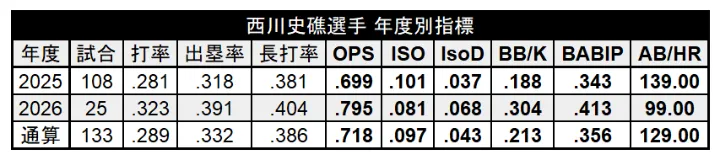
Next, let's look at the various metrics that Nishikawa has achieved so far.

Nishikawa, in his first year as a professional in 2025, posted a batting average of .281, ranking 6th in batting average, and impressively won the Rookie of the Year title. In the same year, he recorded an on-base percentage of .318 and an IsoD of .037, indicating that he adopted an even more aggressive batting style than Fujiwara.
However, this season his on-base percentage is .391 compared to his batting average of .323, and his IsoD is .068, indicating a significant increase in the frequency of drawing Walk. Also, while his BB/K ratio was very low at .188 last season, it has steadily improved to .304 this season. This improved plate discipline is directly linked to his qualities as a chance creator, making it a big plus for a player entrusted with batting in the upper part of the lineup.
Furthermore, his slugging percentage has risen from .381 last season to .404 this season, showing he is becoming hitter can generate more bases, which is encouraging, and his OPS has also improved significantly to .795 compared to the previous year. His productivity as hitter is increasing dramatically.
His BABIP was a fairly high .343 in 2025, but this season he has recorded an exceptionally high number of .413. It is noteworthy that he has consistently maintained a high BABIP despite right-handed hitter, and in this respect, he shows a similar characteristic to Fujiwara. A high BABIP is well-suited to an aggressive hitting style, but it is also interesting that he has been producing a large number of hits this season despite his improved plate discipline.
Will these two players, who have improved their batting eye and productivity, grow into the backbone of the team?
Both Fujiwara and Nishikawa were known for their aggressive batting, but this season they have both shown significant improvement in their plate discipline, which had been a weakness. In addition, their slugging percentages have also risen, greatly increasing their productivity as hitter. These improvements in various metrics are considered to be clear indicators of the evolution of both players.
Can both players maintain their good form and, as a powerful 1-2 batting combination possessing both chance-creating ability and strong hitting, get the team on track? Whether or not these two players succeed could be a key factor in predicting the team's future success or failure, so they will definitely be worth watching.
Written by Ryota Mochizuki
![Chiba Lotte Marines ・ Kyota Fujiwara, Misho Nishikawa [Photo: Courtesy of the team]](https://media.insight.pacificleague.com/webp/ehNfyZKceaWJoveemyumbefVJFPfRkeOsBXusUQe.webp)