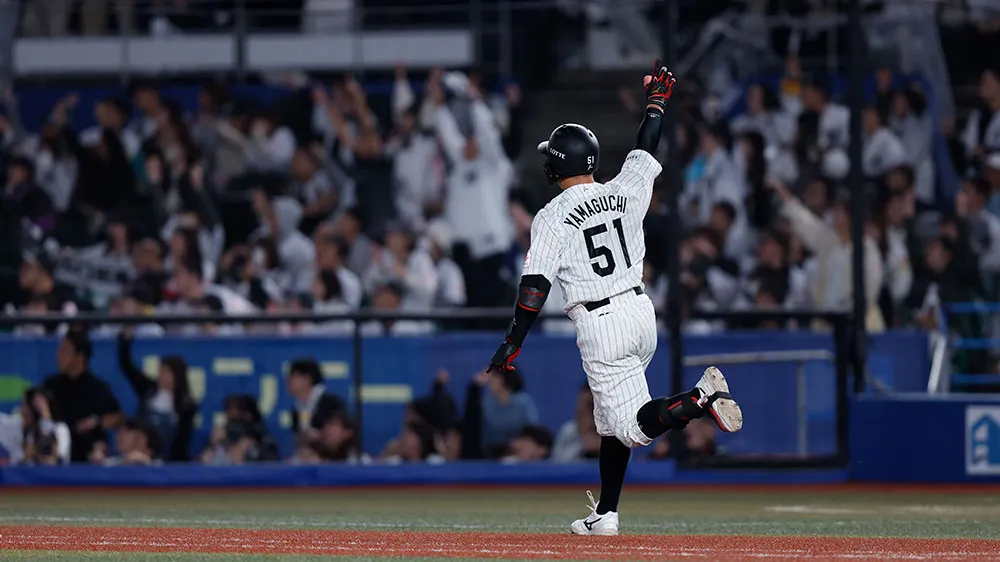
Blossoming into the Japanese-born power hitter the team has long awaited.
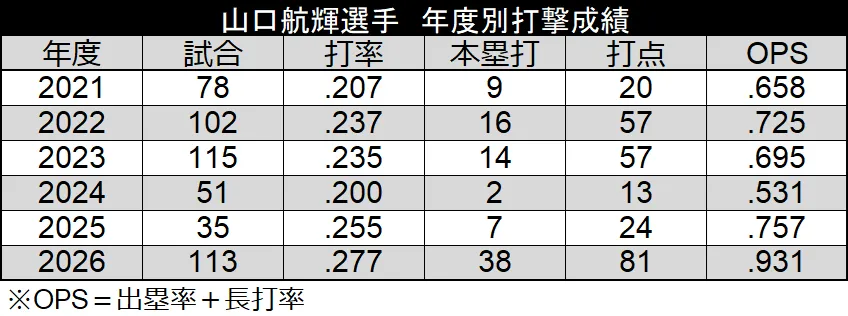
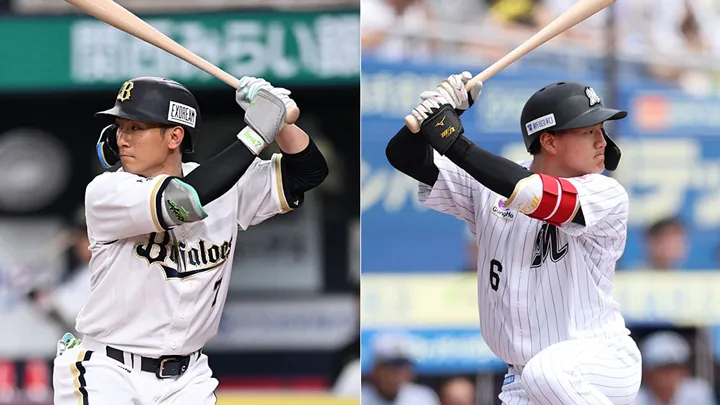
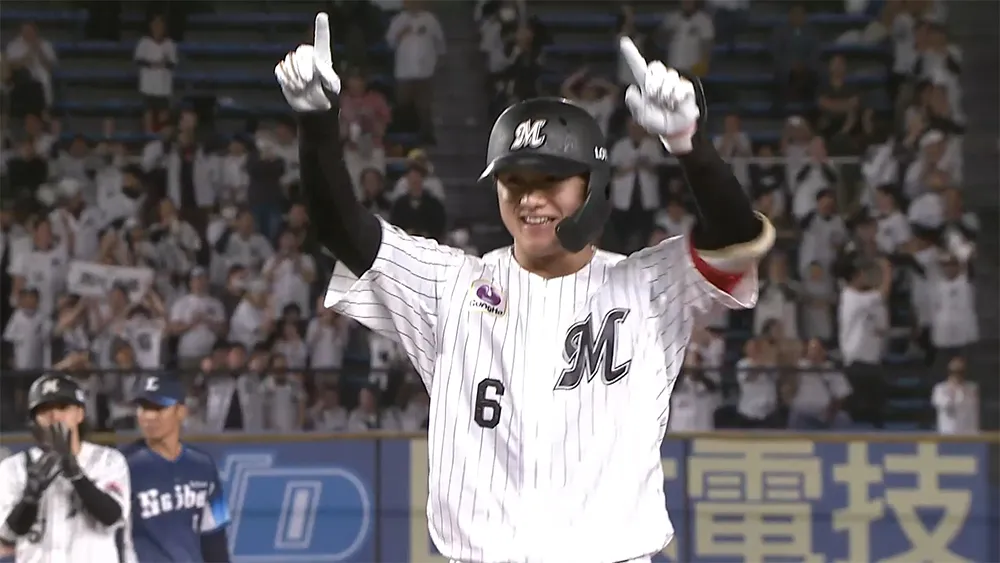
As a batter who made a great leap forward in the 2026 Pacific League, the name of Chiba Lotte Marines' Koki Yamaguchi is indispensable.
Joining the Chiba Lotte Marines as the 4th draft pick in 2018, he led the team with 16 Home Runs in 2022, his fourth professional year, and reached the regulation number of plate appearances for the first time the following year. Although a difficult period followed, he showed signs of a breakthrough late in 2025, including tying a league record with Home Runs in four consecutive plate appearances in August. This season, he surpassed 30 Home Runs in a single season, becoming the first Japanese player for the club to do so since Hiromitsu Ochiai. Ultimately, he increased his numbers to 38 Home Runs, breaking the club record for the most since moving to Chiba, and has grown into the homegrown slugger the team has long awaited. In this article, we would like to delve into the evolution of Yamaguchi's batting through data.
Mass-producing home runs with his characteristic pull-hitting style.
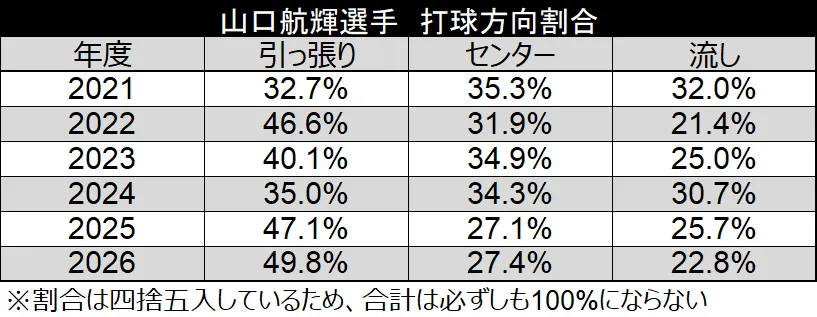
First, I want you to pay attention to the direction of the batted balls. Yamaguchi is a player who, throughout his career, has primarily pulled the ball toward left field, with a pull percentage of 46.6% in 2022 when he recorded 16 Home Runs, and 47.1% last season. This season, that trend has become even stronger, with the percentage rising to 49.8%. Furthermore, out of all 38 Home Runs he hit this season, 31 were recorded toward left field. This season, not only did Yamaguchi's characteristic 'pull' hitting increase more than in typical years, but it also led to results more clearly.
More than 80 percent of inside pitches are hit to the pull side.
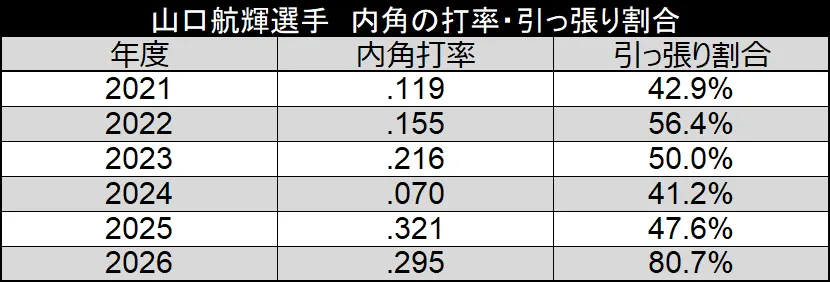
Along with the increase in pulled batted balls, I would like to introduce the data regarding inside pitches. Although he struggled with inside balls when he first entered the pros, he has improved his numbers since the second half of last season and is recording stable results this season with a .295 batting average.
Furthermore, what is particularly noteworthy is the percentage of those inside pitches that he hit back in the pull direction. Last season, it was 47.6%, which was about the same as the Pacific League average, but this season it has risen significantly to 80.7%. It is rare to see such a remarkable change in figures by course, and it shows how much Yamaguchi has strengthened his awareness of pulling this season. In terms of performance, he recorded a high batting average of .435 when pulling inside pitches. His aggressive pulling batting style is likely leading not only to an increase in extra-base hits and home runs but also to the stabilization of his performance.
Taking inspiration from the Tigers' slugger, he is working on a batting form that won't be overpowered by fastballs.
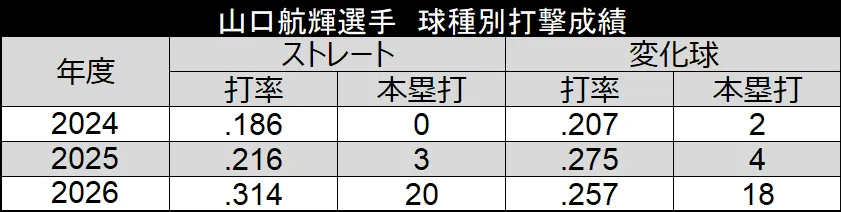
Yamaguchi said that when he was sent down to the farm team for readjustment early this season, Manager Saburo gave him the task of "being able to drive the fastball." Taking that as an opportunity, he also began working on a form change, using Hanshin Tigers' Teruaki Sato as a reference. This paid off, and against the fastballs he had struggled with until last season, he recorded a strong performance this season with a .314 batting average and 20 Home Runs.
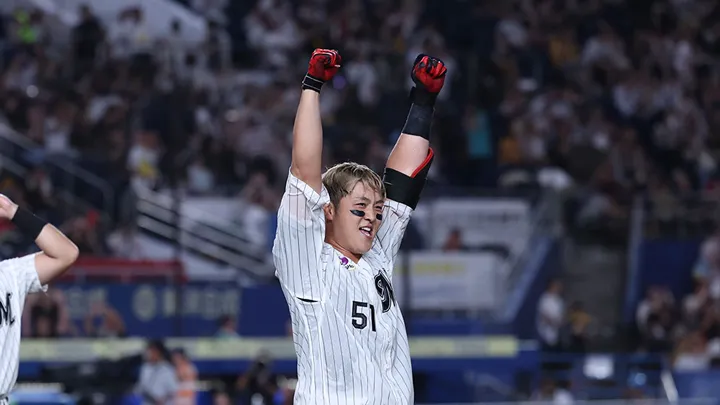
In particular, against fastballs exceeding 150km/h, he had struggled over the five years until last season with a .139 batting average and only 1 Home Run, but this season his performance improved to a .273 batting average and 8 Home Runs. The walk-off blast he hammered into the center-field screen off a 155km/h fastball thrown by pitcher Yuki Matsumoto in the Fukuoka Softbank game on October 3rd can be said to be a shot that symbolizes the results of his form change.
One of the best fly-ball hitters in the baseball world
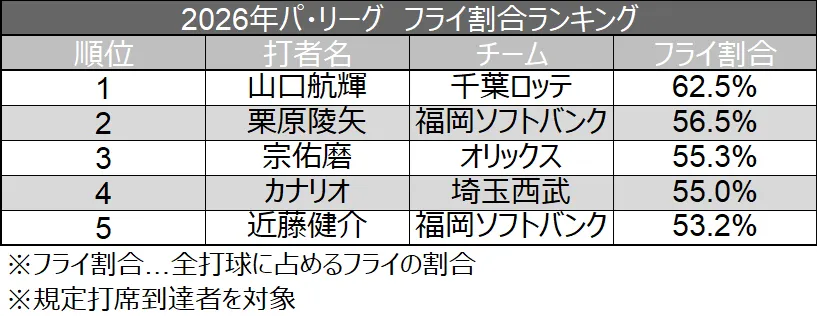
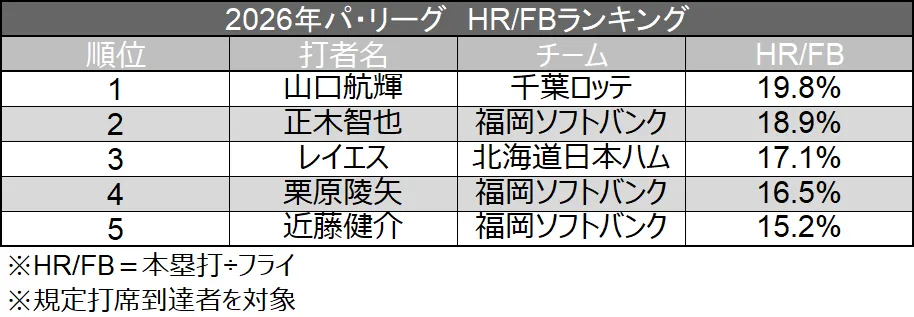
To hit a home run, it is necessary to launch the ball at an angle. In that regard, Yamaguchi has been increasing his fly ball rate year by year, marking 62.5% this season, the highest among Pacific League players who reached the required number of plate appearances. Additionally, he recorded a top figure of 19.8% in HR/FB, which indicates the percentage of fly balls that became home runs. He did not simply increase the number of fly balls; he became able to hit higher-quality fly balls. It can be said that this was a season in which he demonstrated high qualities as a home run hitter.
In addition to the increase in home runs, Yamaguchi showcased impressive performances, such as winning the Taiju Life Monthly MVP Award for August and marking four walk-off hits. Although he achieved a major breakthrough this season and reached the goal of 30 Home Runs or more that he set at his induction press conference eight years ago, he has not yet reached his other goal of becoming the Home Run king. Next season, he will show further growth to lead the team and seize the Home Run king title and the championship flag.
※All figures in the text and tables are as of the end of the 2026 season.
Text/Data Stadium