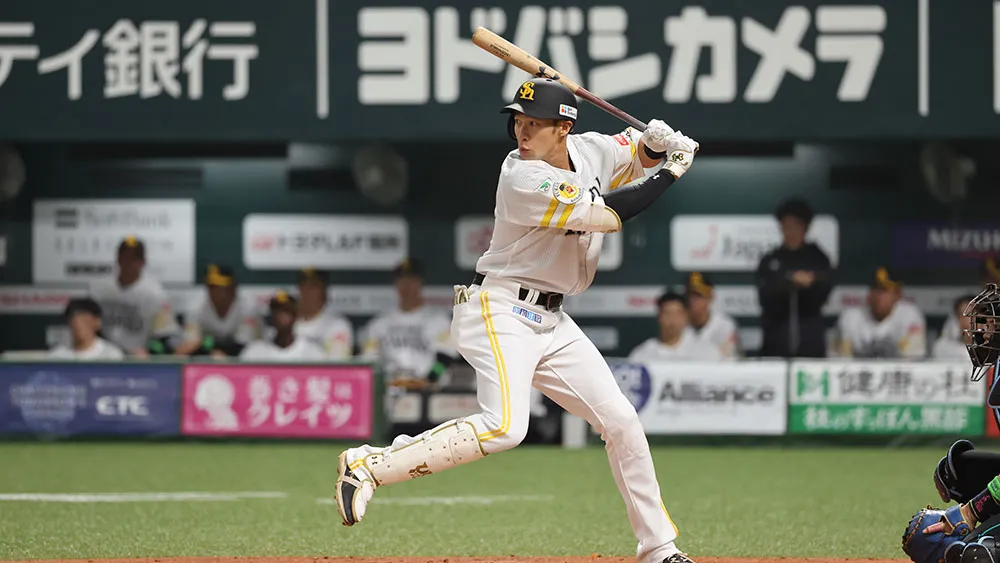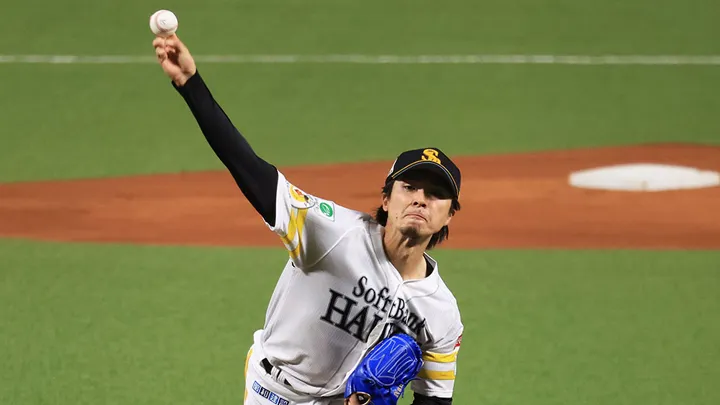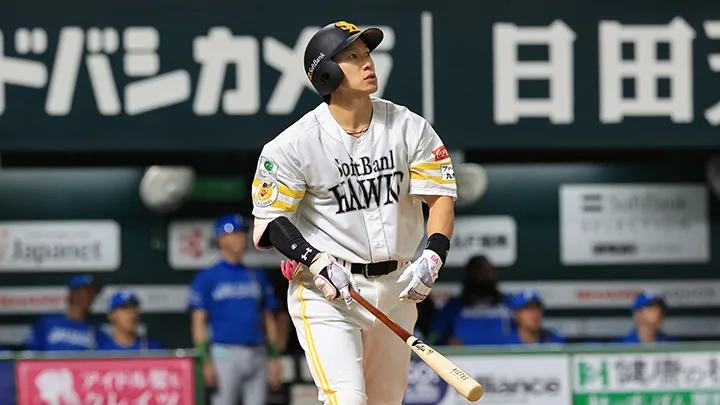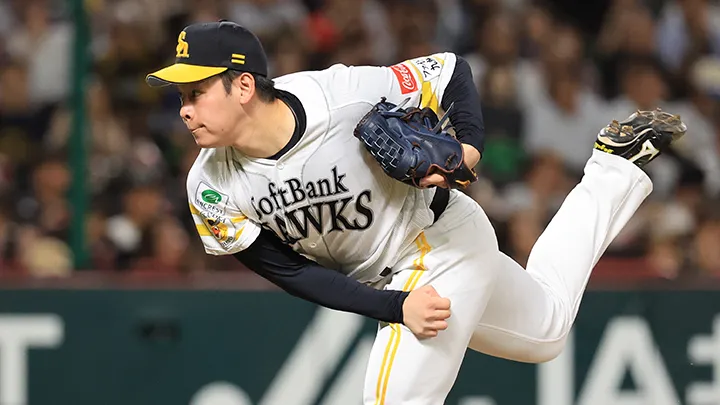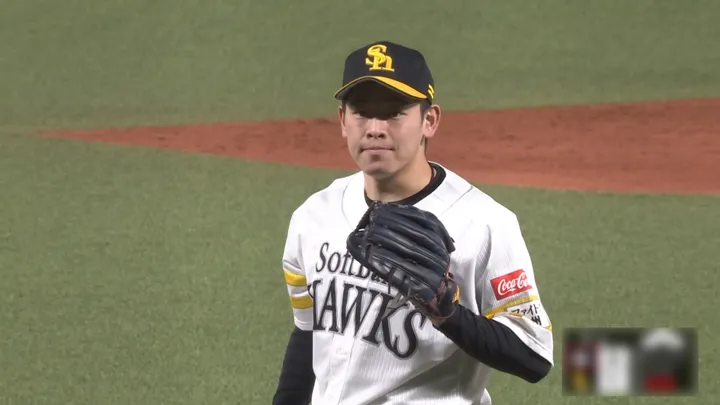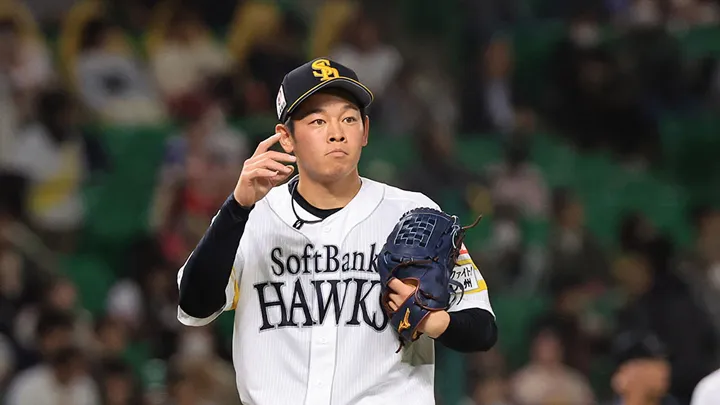
He established himself on the first-team roster starting from his first year as a professional. He also pitched in the Japan Series.

Pitcher Gota Suzuki joined Fukuoka Softbank from Osaka University of Commerce as the 3rd draft pick in 2025. Although there were noticeable instances of him giving up runs early this season, he demonstrated outstanding stability from June onwards, maintaining an ERA in the 0.00 range. In total, he appeared in 40 games and posted a 1.74 ERA, playing a key role in supporting the bullpen of the perennial champions from his rookie year.
Furthermore, he made his first appearance in Game 2 of the "SMBC Japan Series 2026." In the bottom of the 8th inning, after pitcher Yuki Matsumoto left the mound, he inherited a runner but held them to no runs as a closer, cutting off the negative momentum immediately after a comeback. In this article, we will delve into the details of pitcher Gota Suzuki's pitching based on data.
*All figures in the text and tables are as of the end of the 2026 season.
The two main pitch types that supported his excellent performance on the mound
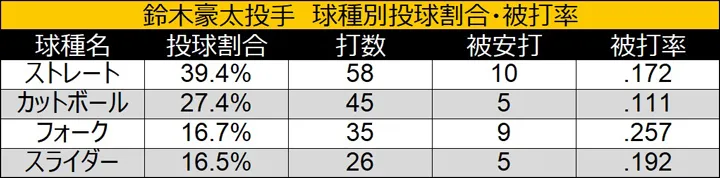
pitcher Suzuki uses a pitch style centered on fastball and cutter, and this season both pitches have posted strong results with Avg.100 percentage. fastball, who has the highest pitch rate, averages about 145 km/h and is by no means faster than other relievers. However, since the game on May 20, he hasn't allowed extra-base hits for this pitch, and along with cutter, he has become a right-hander strength.
A fastball delivered from a sidearm throw.
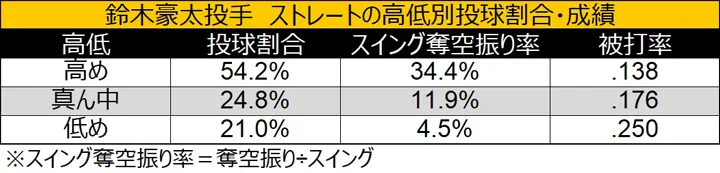
That fastball thrown from a sidearm delivery heads toward the hitter with a trajectory that seems to rise. To take advantage of that characteristic, it is often intentionally thrown to the high zone, and the high pitch ratio recorded 54.2%, which is more than half of the total. The higher the course, the more effective the ball becomes, and the swing-and-miss rate in the high zone marked 34.4%, which is about 13 points higher than the league average.
The cutter, which he has increased the usage of

From here, I would like to focus on the cutter, which is another weapon for pitcher Suzuki. As he himself stated that the priority for this pitch type was "originally quite low in my mind," the pitch percentage until April was 4.2%, the lowest among his repertoire.
However, after increasing its usage frequency based on advice from Chief Pitching Coach Shinji Kurano, his performance stabilized. This pitch type, which can be thrown regardless of whether the opponent hitter is left-handed or right-handed, became so prominent that from August toward the end of the season, it recorded the highest pitch percentage, surpassing his fastball.
A "trump card" for when you are in trouble
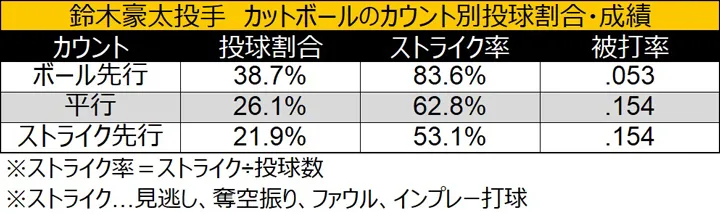
The usage rate of the cutter fluctuates depending on the count; while it is 21.9% when the pitcher is ahead with strikes, it rises to 38.7% when the hitter is ahead with balls. The reason for this is that even when behind in the count, it has a strike rate of 83.6%, making it easy to adjust the count, and an Avg of .053 (1 hit in 19 At Bats), making it difficult to give up a hit.
As pitcher Suzuki says, "Now I can choose the cutter when I'm in trouble," it has become a trump card that can be thrown with confidence even in counts that are disadvantageous for the pitcher.
An ironclad pitch that allows no runners.
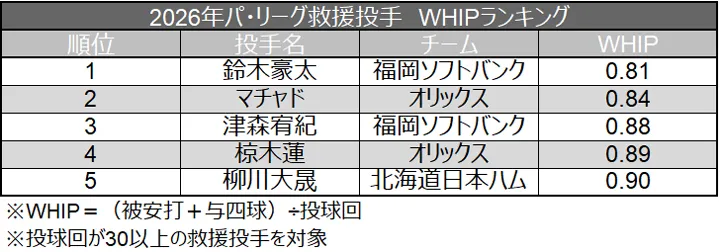
WHIP is an indicator showing the total number of hit and Walk allowed per inning, and pitcher Suzuki recorded the top figure in the Pacific League's relief category. The cutter, which increased in value after he turned pro, functioned as a count pitch, and his BB rate marked 1.74. Combined with not only not giving up hit but also the control to not collapse with Walk, it led to pitch that allowed the fewest runner in the league.
In the game against the Orix Buffaloes on June 25, pitcher Suzuki took the mound in a one-out bases loaded situation, retired Kenya Wakatsuki into a double play with a first-pitch cutter, and grabbed his first pro win with just one pitch. Maintaining the momentum from the middle of the season onwards, he showed great relief that met expectations in the postseason as well.
Next, he will challenge the world's powerhouses as a member of Samurai Japan in the "Raxus Asia Professional baseball Championship 2026." Even on the stage of the Hinomaru, which will be his first including his amateur days, he wants to showcase a dignified performance.
Text by Data Stadium