In Pacific League, Seibu Lions are in top form. They defeated Nippon-Ham Fighters 6-3 on the 17th, putting them in first place for the first time in four years since May.
Seibu Lions 's first-year import, Wynans, made his first start in Japan. He gave up two runs in the third inning, but otherwise pitch well in crucial situations and completed six innings.
Inspired by the excellent pitching of their foreign player, the team's offense also rallied, scoring four runs in the seventh inning to take the lead. They held on to win, giving Wynans his first ever NPB win.
There were several turning points that determined the outcome of this game, but one of the key moments was Seibu Lions 's at-bat in the top of the 5th inning.
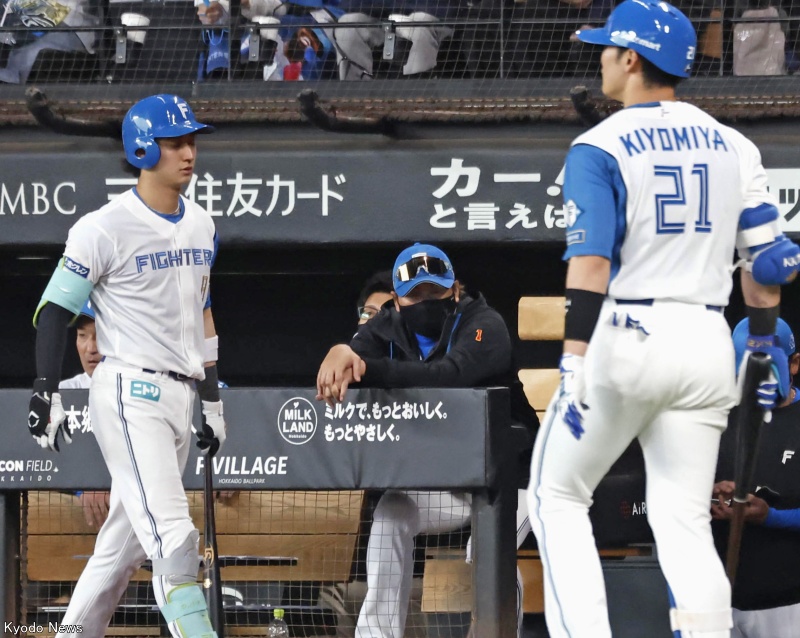
Trailing 0-2, Seibu Lions faced number 9, Natsuo Takizawa, with one out and a runner on second base. Takizawa connected with the fifth pitch, a curveball thrown by Koki Kitayama, but it was a ground ball straight to first baseman. Kotaro Kiyomiya fielded it easily, and it looked like there would be a runner on third with one out, but Kitayama was slightly late covering the base and was ruled safe.
From what could be seen with the naked eye, the timing was close, so manager Shinjo immediately requested a review, but the ruling after the review remained safe. This has caused a huge stir on social media.
The reason is that, although it certainly looked close to the naked eye, when viewed in slow motion, it appeared as if Kitayama's foot had touched the base first. The slow-motion footage was shown repeatedly throughout the stadium, and surely the players from both teams, as well as the fans on both sides, thought that the call would be overturned.
In fact, after a lengthy review, when umpire once again made the safe gesture, even Takizawa, who was still on first base, seemed somewhat surprised. Needless to say, manager Shinjo and Nippon-Ham team were taken aback.
Social media was filled with boos, with comments like, "It's clearly a foul," and "Even an amateur could tell." Some even made sarcastic remarks about the replay center fielder center fielder review it."
Furthermore, some even speculated that "perhaps they couldn't communicate with the replay center fielder, or maybe their intercom was broken and unusable, so the on-field decision was respected."
Replay center fielder is a central judgment center that the NPB began full-scale operation this season in order to verify the judgment of requests at each stadium on video at once. Two first-class umpire and one operator who operates the equipment are stationed in the NPB in Tokyo to watch each game on six monitors, and if there is a request, the video is verified and a final decision is made.
In fact, six professional baseball games were being played simultaneously in both the Central and Pacific Leagues that day, and it seems that requests for replay review were being made at other stadiums around the same time. This may have been one reason why the review took so long, but it cannot be denied that there may have been some kind of communication or other problem.
The replay center fielder which started this season and is still in the experimental stage, is in a sense a black box. Is six monitors appropriate for six games? And who is making the decisions at the replay center fielder? This situation may prompt a demand for greater transparency.
Text by Yu Yagi