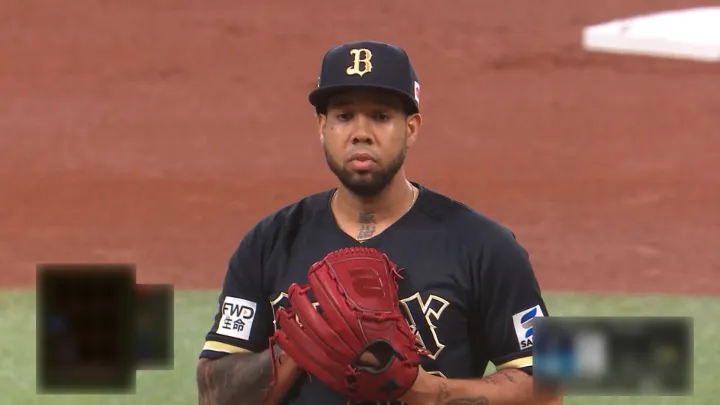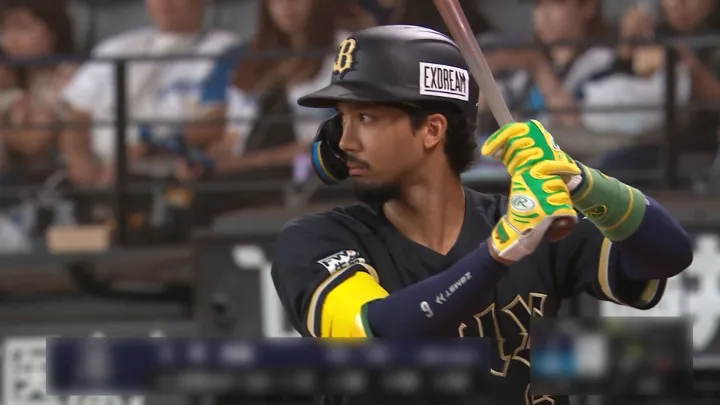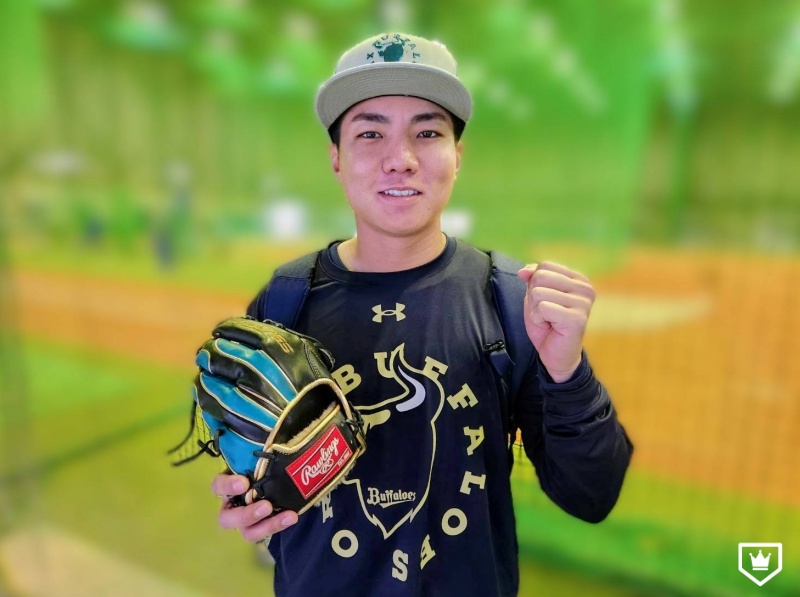
"I'm so grateful to all the trainers who supported me during my rehabilitation and to all the fans who cheered me on. I can't wait to make my 'determination pose' in the first team." Two days after returning to the main roster for the first time in two years, Orix Buffaloes player Sho Gibo spoke with excitement at the team's facilities in Maishima, Osaka.
Gibo hails from Tomigusuku City, Okinawa Prefecture. He joined the team in 2018 as the 5th pick in the draft from Mirai Okinawa High School. He is infielder with excellent all-around skills in hitting, fielding, and running, and as a second second baseman, he earned the nickname "Raging Bull Ninja" for his brilliant defense, such as catch balls hit through the gap between first and second base to get the out.
However, after being diagnosed with "right shoulder anterior impingement syndrome" in March 2024, his playing opportunities decreased, and he was placed on a development contract during the offseason. In 2025, he played in 40 games in Western League by the end of July, recording 27 hits in 94 At Bat hit, 13 RBI, and a batting average of .287, but he was not able to be re-registered as a regular player. The reason was that although his shoulder condition was improving, there were concerns about throw from deep positions and cut plays from outfield.
The "tenacity pose" was born in May 2024. The night after the first interleague game against Hiroshima (Mazda Stadium), when the four players—Haruto Watanabe (one year older), Ryo Ota (same year), and Kotaro Kobayashi (one year younger)—went out for dinner, someone spontaneously said, "We haven't given up on winning the championship yet. Let's stick together as a group of four." Their motto became "tenacity!" and their signature became a pose with their index finger raised and one leg raised. Currently, Yusuke Mugitani has taken over from Gibo and is the team's mood maker.
His shoulder gradually recovered, and by April 30th of this season he had played in 23 games, hitting in 8 consecutive games and hit.289. He also played defense, showcasing his comeback, and was able to be re-registered as a regular player on April 30th.
After two years of hardship, he says the most difficult period was from September to October 2024. Although he returned to the lineup at the end of July, by mid-September his shoulder was no longer cooperating. "I could barely throw 10 meters, and the pain was constant whether I was lying down or walking. I was cornered, realizing that I would be cut from the team if things continued like this," he reveals. In the end, he was released on October 3rd and offered a development contract. If there was a prospect of recovery from his injury, he could look forward, but being released and offered a development contract without any clear end in sight was a different story.
It was the words of Motoki Higa, a senior from Okinawa who was then an active player and the first-team pitcher coach, that dispelled that pain. "It's okay. You can do it." Gibo recalls that Higa's gentle tone with an Okinawan accent "reminded me of my grandparents in Okinawa and calmed me down."
The second crisis came at the end of July 2025 when he was not promoted to the main roster. Although he put up decent batting numbers, he was unable to make relay plays from outfield to home plate as short stop. At this point, Gibo chose to focus on treatment. "I think that was the best decision I could have made. I had a feeling that I wouldn't be able to make it in the major leagues (first team). If I didn't make the main roster this year, I decided to just focus on treatment." General Manager Junichi Fukura and other team executives respected Gibo's decision.
If it didn't work out, he might face being cut from the team for the second time, but he also had a "chance of success." He was confident that his shoulder would heal. "I thought that if rehabilitation didn't work out, well, there was nothing I could do, but I was confident that it would heal. I thought I could continue playing professionally."
He also tried playing in outfield. He chose this position because it involved using outfielder arm throw, which was better suited to his rehabilitation. He was determined to get more playing time, saying, "I don't mind if trying out in outfield shortens my playing career."
number changed from "53" to "153" when he became a developmental player. "Nothing has changed," Gibo says, but he was a little shocked when someone asked him to sign an autograph and asked him to "write your old jersey number." Apparently, they mistook the three-digit number for those of assistant staff who have retired from playing and are helping out with practice.
It was the people of Okinawa who supported him during difficult times. When he returned home, they would say, "We bought merchandise with number 153 on it because it's rare." He felt a strong desire to reciprocate the support of his hometown friends who believed in his return to the main roster. "If I had remained in the minor leagues, it wouldn't have become rare, so I'm glad I was able to return to the main roster," he said with a smile.
肩が快方に向かった昨年オフ、本格的なウエートトレーニングを取り入れた。70kgまで減った体重も79kgまで増量し、筋肉量は5kgも増えた。トレーニングの成果でスイングスピードは増し、打球速度は175kmまでアップした。今春のキャンプでは「長打が出るように後ろからしっかりと振ってかませて打ったらどうなるかを試しています」と試みていた新たな打撃は継続中。「今もヒットは出ているんですが、持っているもので勝負しているという感じです。ちゃんと振りにいく打席と、これまで通りコンタクトしにいく打席を分けているのですが、新しい部分を見つけたいと思ってやっています」という。
"I think having fun is the most important thing. When I go back there, the audience will be so excited, it'll be a lot of fun. I'm looking forward to it. I'm really excited." He's ready whenever he's called upon.
Interview and text by Masaki Kitano